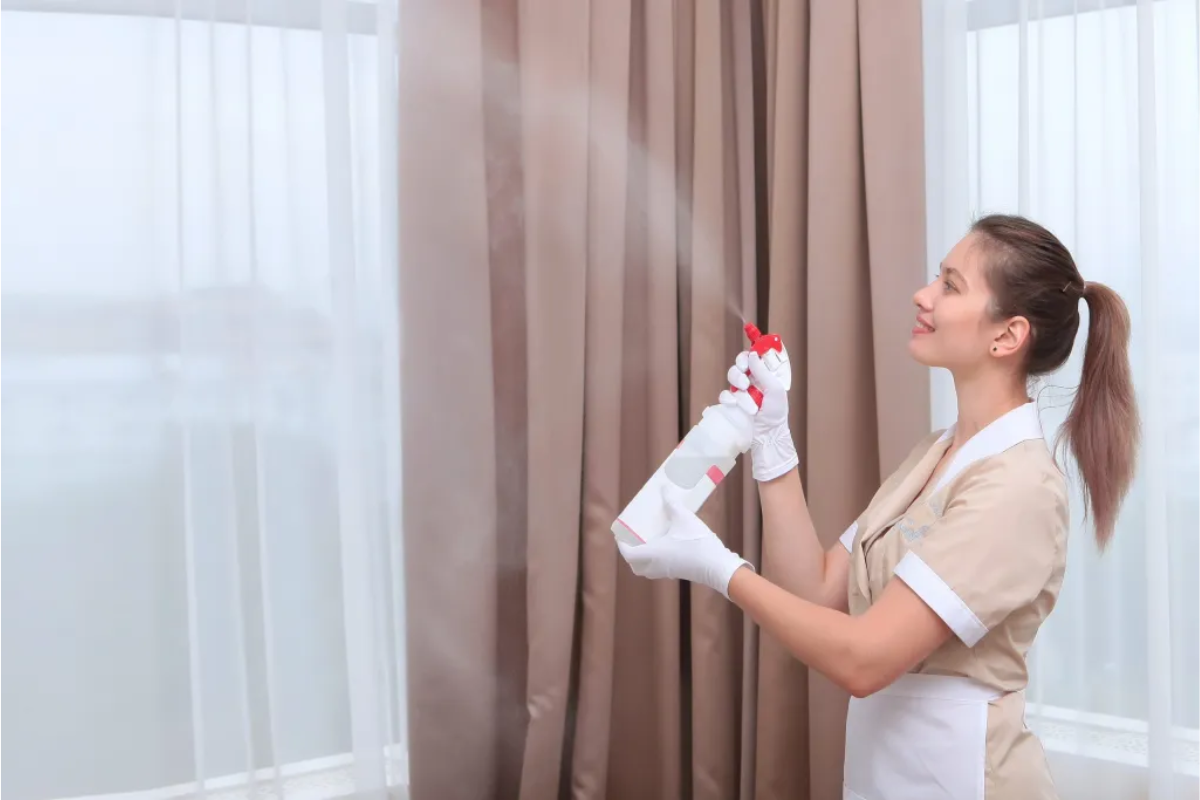
South African hotels and institutional accommodation have learned the hard way: guests forgive small décor scuffs, but they won’t tolerate odours. From coastal humidity in Durban to Highveld dust in Johannesburg, indoor air is a frontline brand asset. The stakes are commercial and immediate—musty rooms trigger negative reviews, refunds, and room-nights lost to out-of-service deep cleans. In a market where occupancies swing with season and events, mastering how to remove odours in hotel rooms is not a “nice to have”—it is a repeat-booking strategy.
Yet odour control isn’t just scenting. It is chemistry, surface hygiene, and process discipline. The best way to control room smells is to eliminate their sources—organic residues, microbial growth, smoke films—then neutralise volatile compounds safely and consistently. When housekeeping teams understand the science and sequence, guest satisfaction follows.
Explore housekeeping-focused solutions for every step of the room turnaround: Housekeeping solutions.
A senior room attendant in Cape Town opens a balcony door after a winter storm. Damp soft furnishings hold a cold, musty note; condensation on window tracks has fed microbial growth; a faint cooking odour lingers from the kitchenette. None of this yields to air freshener. The fix requires targeted chemistry:
Masking overlays odour with fragrance; true control removes it. Effective programs pair detergent-disinfectants for surfaces, enzyme or oxidising chemistry for organics, and specialist odour neutralisers that bind and render malodours non-volatile. Ventilation finishes the job, not starts it.
Equip teams with the right chemistry categories: Detergent-disinfectants and Odour control.
Turnarounds are timed. Supervisors juggle arrivals, VIP pre-checks, linen logistics, and maintenance tickets. In that time pressure, shortcuts creep in—spraying fragrance, skipping contact times, or ignoring window channels and drain traps. Results look clean but smell “nearly clean.” The guest notices.
The operational answer is a disciplined, step-by-step hotel odour removal method that is fast, repeatable and compliant. The goal is fewer re-cleans, fewer comped nights, and higher room-readiness confidence.
Before opening anything, pause and sniff. Is it musty (moisture/microbial), sour (organic residues), chemical (previous over-fragrance), or sewer (plumbing/drain trap)? Diagnosis determines chemistry. Open windows next to purge VOCs while you stage products.
Use a detergent-disinfectant with proven soil removal. Work high-to-low, dry-to-wet. Pay attention to headboards, bedside pedestals, mini-fridge seals, and skirtings—frequent but invisible odour reservoirs. Where grease films or smoke residue persist (especially in kitchenettes or “no-smoking” rooms that were not), bring in a degreaser suitable for housekeeping surfaces to cut the film that locks odours in place.
Resource: Degreaser options for housekeeping tasks.
Odours in bathrooms trace back to biofilm and drains. Apply bathroom cleaner/disinfectant to grout, behind taps, and under rim lines with the correct contact time. Flush and dose drain traps where permitted by on-site procedures to neutralise odour-forming residues. Ventilate to clear chlorine or quaternary notes before guest arrival.
Carpets and upholstery hold on to odour. Spot treat visible soils first; then apply an odour neutraliser designed to chemically bind malodour molecules rather than mask them. For musty rooms, a light, even application followed by dwell time and extraction (as per product guidance) stops the smell at source.
Moisture plus dust equals smell. Clean window glass and window tracks—these channels trap organic debris that contributes to “old room” notes. Clear the channels thoroughly and finish with streak-free glass cleaning for both hygiene and perceptions of freshness.
After source removal, use a professional odour neutraliser per label. Keep fragrance light and consistent brand-wide. Over-fragrancing suggests “cover-up” and triggers complaints.
South African hospitality sites operate under the Occupational Health and Safety Act (OHSA) duty to provide safe workplaces—including chemical handling for housekeeping teams. In practice, that means:
While maritime bodies like SAMSA and TNPA govern ship and port environments, institutional accommodation sites align more directly with OHSA and SANS frameworks. The principle carries across sectors: use the right product for the job, apply to spec, control exposure, and verify outcomes.
A provincial business hotel ran weekend specials to drive occupancy. Complaints spiked: “room smells damp,” “bathroom odour,” “heavy fragrance headache.” An internal review found contact times cut in half and drain maintenance skipped. The remedy was not more air freshener; it was standardising the process:
Within a month, refunds dropped, reviews normalised, and the hotel reclaimed revenue it had been bleeding through preventable odours. The lesson: odour control is a measurable operating discipline that protects RevPAR.
Build your housekeeping program around proven categories: Housekeeping solutions hub.
Guests increasingly equate cleanliness with fresh, neutral air rather than fragrance. Odour control that works at the chemical level produces a quieter room—no antiseptic tang, no floral overload, just absence of malodour. Done well, it reduces re-cleans and chemical over-application, saving water, labour hours, and energy from fewer extraction cycles. For institutional cleaning teams, that’s sustainability with line-item savings.
At 11:15, a supervisor receives a “room smells off” alert from FOH. The attendant arrives with a standard kit: detergent-disinfectant, housekeeping-safe degreaser, neutraliser, spotter, PPE. A quick diagnosis finds a mild sour note in the lounge, a bathroom drain odour, and mildew in window tracks. Sequence kicks in:
The room reads clean. More importantly, it smells clean—a difference the guest registers subconsciously when the door opens.
What is the best way to control room smells without overpowering fragrance?
Neutralise, don’t mask. Remove organic residues with detergent-disinfectant, tackle grease/smoke films with an appropriate degreaser, and finish with an odour neutraliser that binds malodour molecules. Keep fragrance subtle and consistent across the property for a premium feel.
How do I stop recurring bathroom odours between cleans?
Focus on drains and biofilm. Refill trap water seals after deep cleans, dose drains per on-site procedures, and apply bathroom cleaner/disinfectant with full contact time. Pay attention to grout lines and under-rim zones where odours originate.
Are odour neutralisers safe for textiles?
Use only products indicated for soft surfaces and follow label directions. Spot test hidden areas, apply evenly, and allow proper dwell and drying. Over-application can leave residues that re-emit odours; measured dosing prevents this.
How often should window tracks be cleaned to reduce musty smells?
Include window tracks in the periodic schedule—weekly in humid climates, bi-weekly in drier areas. These channels trap moisture and debris that feed odours; routine cleaning prevents the “old room” smell that guests immediately notice.
What training should housekeeping teams get for chemical odour control?
Baseline training covers SDS basics, PPE, dilution/dispensing, contact times, odour diagnostics, and ventilation. Supervisors should audit technique and “smell checks” regularly. Compliance with OHSA duties and adherence to applicable SANS hygiene standards underpin safe, effective practice.
Can fragrancing alone pass guest smell tests?
Not reliably. Guests increasingly associate heavy fragrance with cover-ups. Source removal plus neutralisation delivers a genuinely clean smell. Use light, consistent scenting only as a finishing touch after soils and biofilm are eliminated.
In hospitality, scent is the guest’s first KPI. The properties that win on reviews don’t rely on perfuming; they apply chemistry with discipline—remove, disinfect, degrease where needed, neutralise, ventilate, verify. With trained teams and standardised methods, odour complaints collapse and room-ready times stabilise. That is operational excellence guests can literally breathe.
Work with a specialist:
Build a robust, compliant odour-control program with the right product categories and training support. Start here: Housekeeping, Detergent-disinfectants, and Odour control.


 Previous