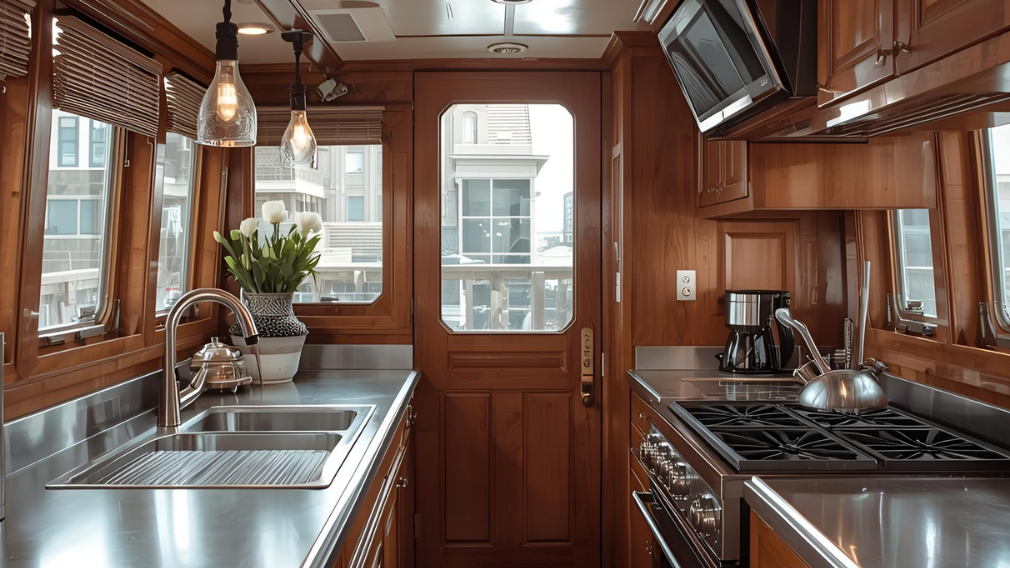
South Africa’s ports—Cape Town, Durban, Gqeberha, Saldanha and beyond—turn around offshore supply vessels, long-liners, cargo carriers and research ships on tight clocks. For masters, engineers and galley supervisors, the question is less “how to disinfect a galley quickly” and more “how to keep food safety airtight while meals, watch changes and port calls keep rolling.” Downtime is expensive; foodborne incidents are worse. In a sector defined by margins and schedules, the ability to clean and disinfect ship galleys without halting service is becoming a core competency for marine operators.
Ashore, a kitchen can close for deep clean. At sea, breakfast becomes lunch becomes midnight snack—often with the same compact team moving between prep, cooking and scullery stations. That reality, compounded by swell, vibration and salt-laden air, demands marine-specific thinking: chemical selection that won’t corrode stainless or aluminium, sensible contact times, and workflows built around micro-windows rather than full shutdowns.
For a quick sector overview and related solutions, see Orlichem’s Marine industry hub.
Galley teams juggle three clocks. The first is the service clock—meals every six hours. The second is the microbial clock—bacteria doubling in minutes on warm, damp surfaces. The third is the regulatory clock—audits, port state control, charterer inspections and internal safety management system (SMS) checks. The only way to satisfy all three is to blend cleaning into the rhythm of work without turning hygiene into theatre: targeted, verified, and repeatable.
Risks concentrate where movement and moisture intersect: prep benches during raw-to-ready transitions; fridge and oven handles; slicers, mixers and blenders; drip-prone areas under bain-maries; deck scuppers; scullery spray zones; and the small wares shuttle running between pass and sink. Add pressure changes through the cold chain—receiving in port, staging, then service—and a workable regime must cover both marine galley cleaning chemicals and method.
Picture a Durban-based supply vessel riding an early swell, with breakfast at 06:30 and cargo ops at 09:00. The chief cook and a deck rating rotate through a hygiene plan designed for flow, not stoppage.
Before first heat-up, food-contact surfaces are cleared, rinsed and treated with a broad-spectrum disinfectant suitable for ship kitchens—formulated for stainless steel and polymer boards, with sane contact times (minutes, not quarters of an hour). High-touch points—chiller latches, oven knobs, tap levers—get a fast-acting spray-and-wipe pass. This is not “deep clean” theatre; it is targeted risk reduction with documented contact time and an air-dry where the product allows, or potable-water rinse where labels require.
During the breakfast rush, the scullery never stops. The plan works in micro-windows: when the grill frees for 90 seconds, a degrease-and-disinfect pass resets the hotplate surround; when the prep bench flips from raw to ready, a two-step clean then disinfect sequence ensures no cross-contamination. Spills are neutralised immediately—detergent to lift soil, then an appropriate disinfectant, observing label-stated contact time. Knives and small wares rotate through sink sanitising or a chemical dosing unit between runs. The test of success: no plate leaves late, no surface stays dirty.
When the rush passes, verification takes over. ATP swabs on a sample of benches and handles confirm the efficacy of the regime. A quick review of the log shows contact times met and corrective actions noted. The galley supervisor signs off, filing records into the ship’s SMS. The next meal cycle can begin with confidence rather than hope.
“Disinfectants for ship kitchens” is not a generic phrase. In practice, it means agents that are food-area suitable, effective against typical kitchen pathogens, compatible with metals and seals, and realistic for crews. What are best practices for food safety in ship kitchens? Start with efficacy and material compatibility, then match to workflow.
Contact time and speed. A product that claims broad kill but demands a ten-minute wet film may be impractical during service. Where the label allows shorter contact times for lightly soiled surfaces, schedule the longer contact applications for post-rush.
Rinse vs no-rinse. Some sanitisers permit air-dry on food-contact surfaces; others require a potable-water rinse after the contact time. Workflows must respect the label, full stop. The safest “shortcut” is one you never take.
Material compatibility. Marine galleys carry stainless, aluminium, painted panels and various polymers. Avoid aggressive oxidisers on aluminium trims and unsealed elastomers. Choosing marine galley cleaning chemicals labelled for multi-surface compatibility reduces corrosion risk and extends equipment life.
Dosing and labelling. Closed-loop dosing where possible; clear secondary labelling where not. Over-concentration wastes money and can leave residues; under-dosing undermines the whole plan.
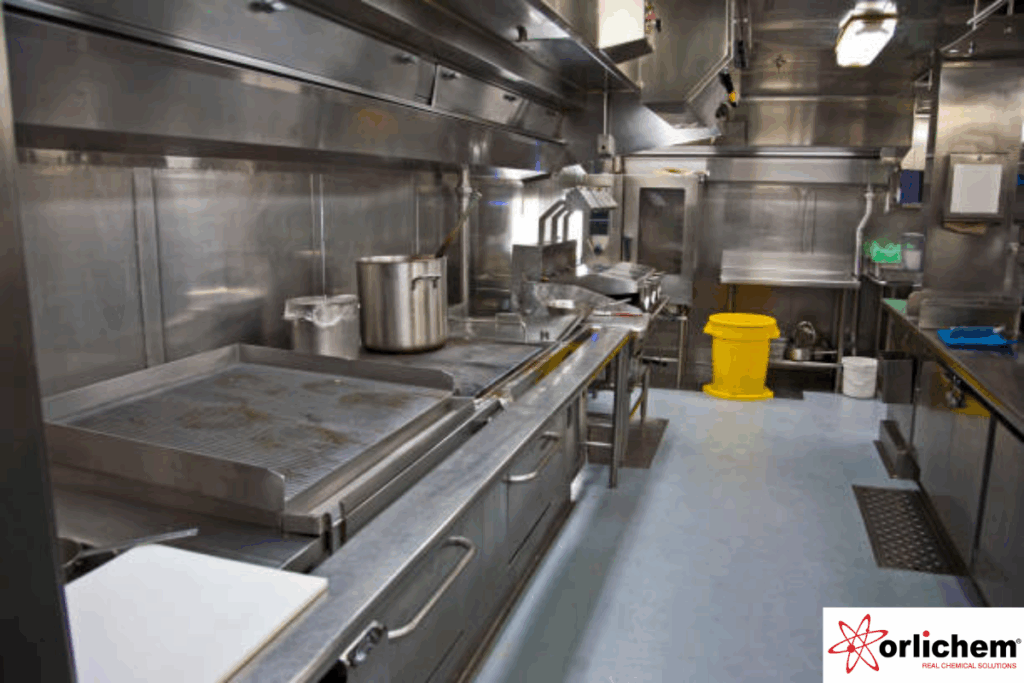
South African operators sail under a layered framework. The vessel’s Safety Management System—built under the International Safety Management (ISM) Code—sets day-to-day controls, and SAMSA audits will expect to see hygiene embedded in the SMS rather than treated as an afterthought. TNPA influences what happens dockside—receiving, waste segregation, and discharge rules in port precincts. On board, the Occupational Health and Safety Act (OHSA) requires employers to provide and maintain a working environment that is safe and without risk to health; in kitchens, that translates to chemical handling, PPE and safe systems of work.
Food-safety practice should align with South African standards widely adopted ashore and increasingly referenced offshore: SANS 10049 (prerequisite programmes for food safety) and SANS 10330 (HACCP). While ships are unique environments, the principles—hazard analysis, critical control points, verification and record-keeping—map neatly into a galley’s hygiene plan. The outcome regulators and charterers want is consistent: demonstrable control of hazards, backed by records and training.
Auditors rarely find problems in the obvious places. They spot residue under the lip of a bain-marie, a streak on the underside of a prep table, the forgotten underside of a cutting board, or a busy handwash basin missing soap refills at peak. Real-world fixes are mundane: a flashlight inspection habit; a weekly underside-surfaces focus; a “handles, levers, latches” mini-round every two hours; and a standing rule that anything dropped to the deck is out of play until reset.
The scullery deserves special attention. High-pressure sprays aerosolise soil. Without immediate surface follow-through—detergent, rinse, then disinfectant—those aerosols settle on adjacent prep zones. Ventilation and spray discipline matter as much as chemistry.
The best plan fails if it lives in a folder. Training should be short, repeated and practical: how to read a label; how to time a contact; what “visibly clean” looks like; where to store wipes; how to manage changeovers between raw and ready; when to quarantine a surface or utensil. Crew rotate, charters change, and the person on nights may be a day-rate hire. A laminated one-pager at eye level beats a 40-page manual no one reads.
Verification should be visible and non-punitive: ATP swab trending, monthly internal inspections, and a simple “stop-the-line” rule if contact time is missed on a critical control point. The point is not to catch people out; it is to prove the system works.
Consider a coastal vessel serving 20 crew, three meals a day, with a 20-minute “lost galley” episode during each service due to ad-hoc cleaning. That is an hour a day of inefficiency—300 hours a year, at a blended galley labour and opportunity cost of, say, R600/hour: R180,000 annually. Add the intangible but very real cost of morale when meals slip, and the risk of a single food-safety incident—medical care, voyage disruption, reputational damage—and the business case for an integrated, no-downtime hygiene plan writes itself.
In contrast, a micro-window regime with realistic contact times and the right disinfectants for ship kitchens can fold seamlessly into service. Efficiency is not the opposite of safety; it is often the proof of it.
Marine operators win with boring consistency: consolidated chemical ranges (fewer SKUs to train and store), clear SDS access, labelled decant bottles, and replenishment aligned to port calls. Where ships flip between coastal and longer legs, buffer stock on high-turn items—disinfectant concentrates, hand-soap cartridges, single-use wipes—prevents substitution at sea with whatever is at hand. Chemical choice should also consider disposal in port; TNPA rules and local waste contractors may specify segregation or return policies for empties and concentrates.
Designate a hygiene lead who is not the busiest cook. A deck rating trained to manage micro-windows, contact times and swab checks can carry the routine without slowing the line.
Write the plan to the galley, not the brochure. Every layout—bulkhead angles, pass height, scullery position—changes how mists move and where drips land. The best plans are sketched on site.
Audit the quiet hours. The real tell is the 03:00 watch. If handles are sticky then, the plan isn’t embedded.
If your fleet is revisiting food-safety routines or you are setting up a new galley team, start with a short, site-specific review of chemistry, contact times and workflow. For marine-ready products and sector guidance, explore Orlichem’s Marine cluster.
How do I disinfect a galley quickly without stopping service?
Work in micro-windows. Clean and then apply a food-area disinfectant with realistic contact time to high-touch surfaces between tasks, not after service. Reserve longer contact-time applications for post-rush. Verify with spot ATP tests and record the outcome in the ship’s SMS.
Which disinfectants are best for ship kitchens?
Choose marine-appropriate products labelled for food-contact surfaces, effective against kitchen pathogens, with contact times that fit operations. Prioritise compatibility with stainless, aluminium and seals. Follow label directions on rinse vs no-rinse. Closed-loop dosing reduces errors and improves consistency.
How do we align galley hygiene with SAMSA and SANS expectations?
Embed hygiene in your Safety Management System, train crews, and keep records. Use HACCP principles (SANS 10330) with clear prerequisites (SANS 10049). Demonstrate verification—swab trends, checks and corrective actions. SAMSA and port-state inspectors look for evidence that the system works, not just that it exists.
What are the biggest risk hotspots we miss at audit time?
Undersides and edges—bain-marie lips, table undersides, door gaskets, and hand-contact areas like fridge handles and tap levers. Scullery overspray can redistribute soil; pair spray discipline with immediate surface resets and periodic focused underside checks.
Do “no-rinse” products mean we never rinse?
Only where the label permits and only on pre-cleaned surfaces at the correct dose and contact time. If the product specifies a potable-water rinse for food-contact surfaces, you must rinse. The label governs; deviations undermine safety and can attract findings during audits.
How do we prevent corrosion while keeping efficacy high?
Match chemistry to materials. Avoid aggressive oxidisers on aluminium trims and unsealed elastomers, and use products explicitly rated for multi-surface galley use. Rinse where required and keep to recommended doses. Good chemistry protects both people and plant.
In South African waters, the safest galleys are also the most efficient. When chemistry, micro-window methods and verification align, meals run on time, food safety holds steady, and audits become routine rather than a scramble. The point is not to clean more; it’s to clean smarter—without downtime.
If you’re refining your onboard hygiene plan or commissioning a new galley, Orlichem can help with product selection, dosing advice and crew training tailored to marine realities. Visit the Marine cluster for sector context to get started.
Prefer to speak to someone? Call +27 21 932 6457 or email orders@orlichem.co.za.


 Previous