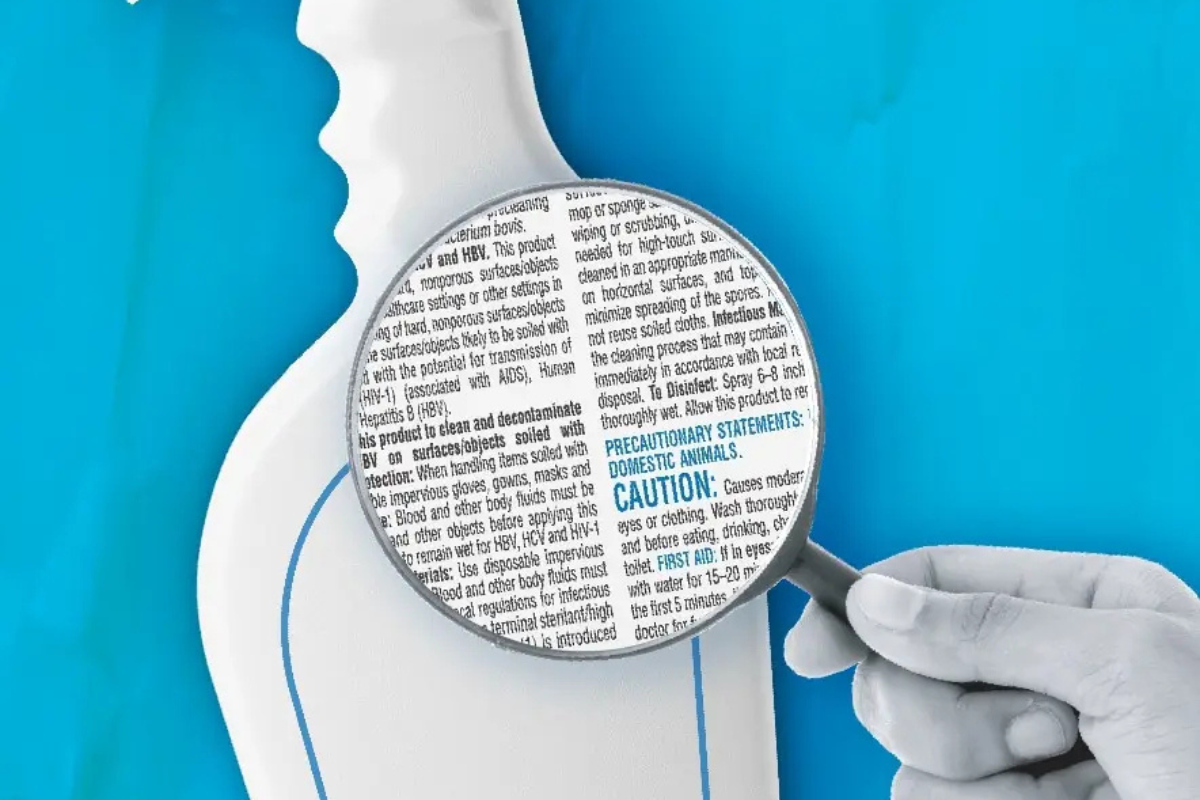
Food safety is a national priority with reputational, legal, and economic implications. Whether you run an industrial kitchen, a packhouse, a dairy plant or a guesthouse, one poorly chosen or misused sanitizer can trigger product loss, downtime, and costly investigations. In a competitive market, “food-safe” isn’t a buzzword—it’s a promise to customers, regulators, and your own team.
This feature unpacks how to read labels on food-safe sanitizers, why label literacy matters, and how South African regulations frame compliance. Think of it not as a manual, but as a story about risk, reliability, and operational discipline—told through the deceptively small print on a chemical label.
Imagine a maintenance supervisor at a busy hospitality operation. Deliveries are late, the lunch rush is minutes away, and a “universal sanitizer” is offered as a substitute. The label looks clean. The claims look bold. In that pressure window, two decisions are made: what to buy—and how it will be used. The first is procurement; the second is food safety. Both live and die on what the label says—and what people understand it to mean.
Using a general-purpose disinfectant on food-contact surfaces isn’t a grey area—it’s a risk decision. Without explicit food-contact guidance, you may leave residues, affect taste/odour, or breach safety expectations.
A sanitizer too weak is ineffective; too strong leaves residues and raises occupational exposure. Labels translate to workplace math—dilution ratios must be measurable, repeatable, and audited.
In real operations, contact time gets squeezed by rush and routine. Supervisors should design tasks that protect dwell time—clearly marked timers, staggered zones, and visual controls.
If a label (and SDS) can’t be produced during an audit, you don’t have proof of control—only good intentions. Documentation is a compliance instrument, not a filing exercise.
Under the Occupational Health and Safety Act (OHSA), employers must control chemical risks and provide information, training, and supervision for safe use. Labels and SDS are core to that duty.
South African SANS standards establish the language of conformity for disinfectants and hygiene processes used in food environments. You don’t need to memorise numbers—what matters is that products and processes can be shown to align with relevant SANS requirements and industry best practice for food-contact hygiene.
Food-adjacent industrial sites interact with municipal health inspections and, where applicable, industry bodies and certifications. Auditors will look for label alignment with intended use, documented dilutions, and evidence of training. In marine catering, port-linked operations, and ship chandling, safety governance intersects with authorities such as TNPA in port environments and SAMSA for shipboard safety expectations—again reinforcing the need for controlled chemical handling and fit-for-purpose labeling.
Your goods arrive. The team verifies product name, batch/lot, and expiry date against the purchase order. The label is intact, legible, and the SDS is on file. If the substitute product claims “food-safe,” the label must explicitly reference food-contact surfaces and provide rinse/no-rinse guidance. No clarity? No issue—reject or quarantine until the supplier confirms.
Internal resource: confirm your supplier’s capability and traceability standards with their corporate profile and industry pages at orlichem.co.za.
Maintenance or SHEQ sets the approved dilution according to the label’s in-use concentration. This becomes the site standard—laminated at the point of use, locked in a dosing system, and checked by conductivity/ppm where relevant. Supervisors keep a copy of instructions near dispensers.
See process-focused pages on cleaning in place to align your plant process with chemistry: Cleaning in Place (CIP) and Caustic Cleaning.
Labels assume a clean surface. In every kitchen and line, soil load blunts sanitizer performance. The team removes visible debris, applies a compatible detergent, rinses, then sanitizes. If the label specifies two-step methods (detergent ? sanitizer), follow it. If it’s a combined cleaner-sanitizer, the label will define how soils affect efficacy—honour that guidance.
Operators use a simple timer or a visual cue (e.g., coloured tags) to ensure surfaces stay wet for the full dwell time. Supervisors check a few rotations daily and initial a control sheet. If the label says rinse afterwards, rinse with potable water; if it says no-rinse on food-contact surfaces, document that instruction and stick to it.
Before trading or restart, line leads check that chemicals are secured, labels visible, and PPE stowed correctly. Random dilution checks and batch traceability are logged. That logbook is your audit shield.
For sterilisation-adjacent processes, see Acid Clean & Sterilisation for context on where sanitizing ends and sterilising begins in plant hygiene design.
A general disinfectant may be perfect for floors and walls but out of bounds for chopping boards or conveyor belts. If the label doesn’t say food-contact, don’t assume it.
Look for the qualifier. Some products are no-rinse on non-food-contact surfaces only. On food-contact surfaces, many require a potable water rinse after the dwell time.
Undiluted application can increase residues, hazards, and cost. If the label prescribes dilution, that is the safe and tested mode. “More” is not “safer.”
Label-compatible applicators matter. Microfibre vs cotton, spray vs foam—these choices affect wet time and coverage. A label often hints at method; if not, your SOP should.
Build wall charts and short videos around this order, not chemical theory. In audits and rush hours alike, clarity wins.
Every re-clean, re-wash, or batch hold costs money. Misread labels create process variation that ripples into overtime, product loss, and guest complaints. Conversely, when label literacy is baked into SOPs:
In a margin-tight environment, that’s competitive advantage—delivered one correctly read label at a time.
A food-safe sanitizer is a chemical product explicitly intended for food-contact surfaces, with clear instructions on dilution, contact time, and whether a potable-water rinse is required. Its label and SDS support traceability and correct use in kitchens, food plants, and hospitality operations, under South African safety expectations.
Start with intended use (must mention food-contact surfaces), then check dilution and contact time. Confirm rinse/no-rinse instructions for food-contact surfaces, note active ingredients and PPE, and record batch/expiry. Build SOPs and wall charts around this reading order to reduce errors.
Labels are the manufacturer’s validated instructions for efficacy and safe use. Misreading them leads to under-sanitizing (contamination risk) or over-dosing (residues, odour, cost, occupational exposure). In South Africa, clear adherence supports OHSA duties, audit outcomes, and customer confidence.
Not always—only the label decides. Many food-contact sanitizers require a potable-water rinse after the stated dwell time. If a product is truly no-rinse on food-contact surfaces, it will say so explicitly. When in doubt, treat as rinse-required and consult the supplier.
At minimum: label, SDS, batch/lot, expiry, and directions for use with dilution and contact time. Keep supplier technical contacts and your own SOPs on file. This documentation underpins training, traceability, and audit readiness in line with South African expectations.
Food safety lives in the details—and the details live on the label. Read for intent (food-contact), dose for efficacy (dilution and dwell), and document for accountability (batch, expiry, SOPs). The result is cleaner operations, fewer surprises, and stronger compliance posture.
Need help translating labels into robust SOPs?
Speak to the team that builds chemistry around process, not the other way around:
For guidance on selecting and implementing food-safe sanitizers—and turning label instructions into reliable plant routines—contact Orlichem via the links above.


 Previous