
Paint removal is rarely anyone’s favourite task, yet it sits at the centre of reliability, refurbishment, and compliance in South African workshops. Whether you’re preparing a pump housing for inspection, refurbishing plant skids, or restoring electrical enclosures, the way you strip coatings determines how quickly assets return to service—and how safely teams work while doing it. Get it right and you prevent hidden corrosion, improve adhesion for new coatings, and shorten maintenance windows. Get it wrong and you add cost, introduce health risks, and extend downtime.
South African facilities face a familiar triangle: high utilisation, lean maintenance headcount, and rising quality expectations from customers. In this context, how to strip paint in engineering workshops becomes less about chemistry trivia and more about practical trade-offs—speed versus substrate integrity; safety versus productivity; and immediate results versus long-term reliability.
Paint-stripping happens near production lines, service bays, or rebuild benches—places where a spill, spark, or fume exposure can cascade. This heightens the need for ventilation, compatible chemicals, and trained supervision.
The Occupational Health and Safety Act (OHSA) places clear duties on employers to manage hazardous chemical exposure. SANS standards guide ventilation, PPE selection, and waste handling. In marine and port-adjacent engineering, TNPA (Transnet National Ports Authority) site rules and SAMSA (South African Maritime Safety Authority) guidelines add further controls for confined spaces, hot-work isolation, and waste transfer. Even when the job is “only” paint removal, the compliance footprint is non-negotiable.
From a reliability perspective, paint removal is not a cosmetic task. Old coatings can trap moisture, hide pitting, and compromise NDT (non-destructive testing). Effective stripping allows proper surface preparation and accurate inspection—a prerequisite for meaningful MTBF gains.
For a deeper look at related cleaning and prep themes, see Orlichem’s Engineering hub, including Degreasing and Electrical Cleaners categories:
A Gauteng workshop receives a refurbishment job on a set of gear housings. The previous coating is chipping, and new paint delaminates within days. The team suspects surface contamination and residual microfilms from an old chemical stripper. Turnaround is tight; the client expects the line back in service by Monday.
Decision point: what is the safest way to remove paint from machinery without compromising tolerances or introducing new risks?
The foreman doesn’t start with chemicals. He confirms the coating type (old epoxy over zinc-rich primer), notes the substrate (cast steel), checks for embedded oils, and flags threaded areas and bearing faces that mustn’t be abraded. In parallel, SHEQ reviews ventilation capability and nearby ignition sources.
Why it matters: Matching method to coating/substrate prevents either under-stripping (slow, patchy removal) or over-aggression (substrate damage, dimensional change).
In many workshops, a hybrid approach wins: mechanical for bulk removal, chemical or thermal for recesses and complex geometries. The productivity gain isn’t just speed—it’s fewer reworks and cleaner surfaces for NDT and recoat.
The workshop moves to a designated preparation bay with local exhaust ventilation and spill containment. Decanting happens inside a bunded area. SDSs are on hand. Decanted volumes are measured against the batch size to avoid overuse.
OHSA & SANS lens: Adequate ventilation, chemical-resistant gloves, goggles/face shields, coveralls, and respiratory protection are selected per SDS controls. Where flammable vapours are possible, intrinsically safe equipment and earthing are reinforced. In marine engineering contexts or port zones, TNPA work permits and SAMSA guidance on hot-work adjacency are observed.
Pro tip: Integrate Hygiene, Hand Care & Sanitisers at the bay (https://orlichem.co.za/industries/engineering/hygiene-hand-care-and-sanitisers/) to reduce dermal exposure risks and improve compliance habits on shift.
All paint sludge, used pads, and contaminated PPE go into labelled, sealed containers for collection by a licensed waste contractor. The workshop keeps a waste manifest, aligns with SANS waste storage guidance, and logs the removal as part of the job card. In port environments, TNPA site documentation is added; for shipboard work, SAMSA-aligned waste transfer procedures are used.
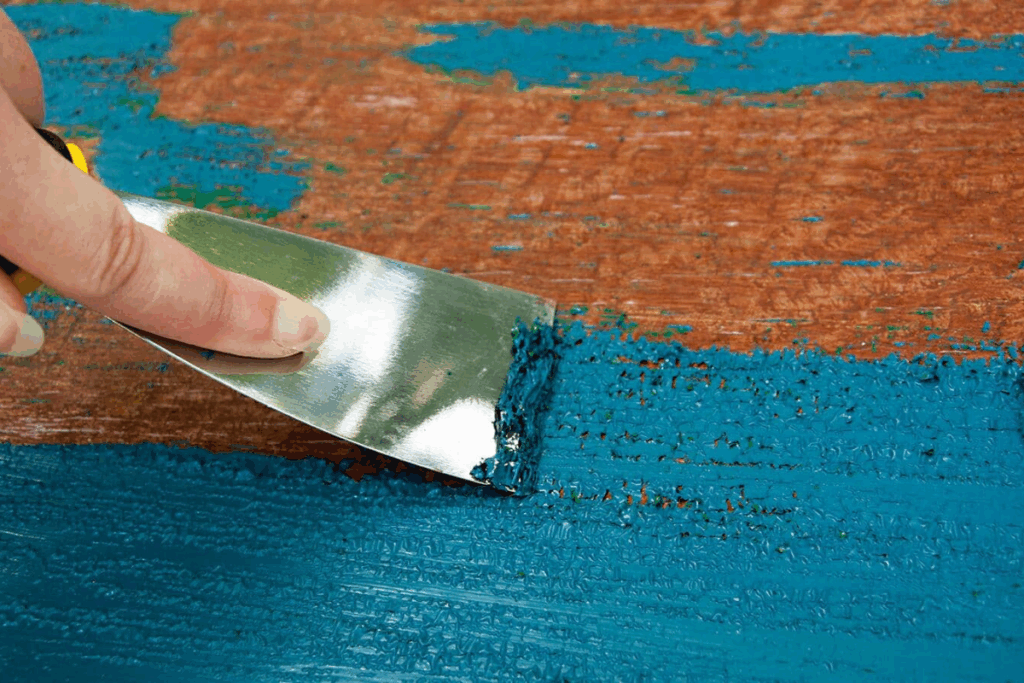
Paint stripping is just the gateway to adhesion and accurate inspection. After removal, target the specified surface profile (e.g., for epoxy systems) and verify readiness with cleanliness tests. Rushing from stripping to topcoat without proper profiling is the number-one cause of premature failure.
The safest way to remove paint from machinery is the one your team can execute consistently. That hinges on reinforcement: toolbox talks on SDS changes, “show me” demos of neutralisation steps, and visible supervision during first-of-kind jobs. When supervisors treat PPE as a productivity enabler—protecting skin and lungs so teams can work faster for longer—uptake improves.
Note: Your exact obligations depend on site, sector, and the chemicals/methods used. SHEQ should confirm the applicable SANS documents and keep current versions accessible.
Every hour spent wrestling with stubborn coatings is an hour a critical asset isn’t earning. Fast, controlled stripping yields three compounding benefits:
Workshops that track these variables—strip time per part, failure rates post-recoat, and waste volumes—report steady declines in downtime and scrappage. The savings aren’t only chemical line items; they show up in availability, warranty claims avoided, and client retention.
For product selection and technical guidance, see Orlichem’s Paint Stripping & Residue Removers category:
A Mpumalanga rebuild shop turned a recurring headache into a win by separating “bulk removal” from “precision clean.” They mechanised first-pass removal on flat faces, then applied a gel stripper to recesses with defined dwell times. A rinse-and-neutralise station sat between the two benches. The result: a 28% reduction in total strip time, a measurable improvement in adhesion test results, and fewer operator complaints about fumes—because ventilation and sequencing were designed into the process, not bolted on at the end.
How do I decide between mechanical, chemical, and thermal paint stripping?
Start with the coating type, substrate, geometry, and available controls. Mechanical is fast on flat areas; chemical excels on complex parts; thermal can lift multi-layered films. Many workshops use a hybrid approach: mechanical for bulk removal, chemical for recesses, and careful thermal where safe ventilation exists.
What is the safest way to remove paint from machinery?
The safest method is the one matched to your risk profile and executed under OHSA and SANS controls. Use local exhaust ventilation, appropriate PPE, intrinsically safe tools where needed, and follow SDS instructions, including neutralisation. Keep contaminated waste in sealed, labelled containers for licensed disposal.
How do I prevent poor adhesion after stripping?
Degrease before stripping, respect dwell times, neutralise as specified, and rinse thoroughly. Dry completely, verify surface cleanliness, and achieve the required surface profile before priming. Residual stripper or embedded contaminants are the most common root causes of coating failure.
What should my team do about fumes and ventilation?
Designate a prep bay with local exhaust ventilation sized to capture emissions at source. Validate airflow routinely. Where flammable vapours are possible, use intrinsically safe equipment and avoid ignition sources. Respiratory protection must align with the chemical’s SDS.
How should we handle waste from paint stripping?
Treat all residues, pads, and PPE as hazardous waste unless proven otherwise. Store in compatible, sealed, labelled containers. Keep manifests and arrange removal via a licensed contractor. In port or marine contexts, ensure TNPA/SAMSA documentation covers transfer and pollution prevention.
Does paint stripping affect inspection and NDT?
Yes. Clean, residue-free substrates enable accurate visual inspection and NDT. Stripping that leaves films or alters surface integrity can mask defects or invalidate results. Coordinate stripping and surface preparation with the inspection plan.
Paint stripping is a reliability lever, not a nuisance task. When South African workshops plan methods by risk, enforce OHSA/SANS controls, and integrate degreasing, neutralisation, and hygiene into a disciplined workflow, they cut downtime and lift first-time quality. The payoff is visible on the production schedule and the balance sheet.
Ready to optimise your stripping and surface prep?
Explore Orlichem’s engineered ranges for Paint Stripping & Residue Removers, Degreasing, and Electrical Cleaners, and talk to a specialist about a method matched to your substrates, coatings, and compliance needs.


 Previous