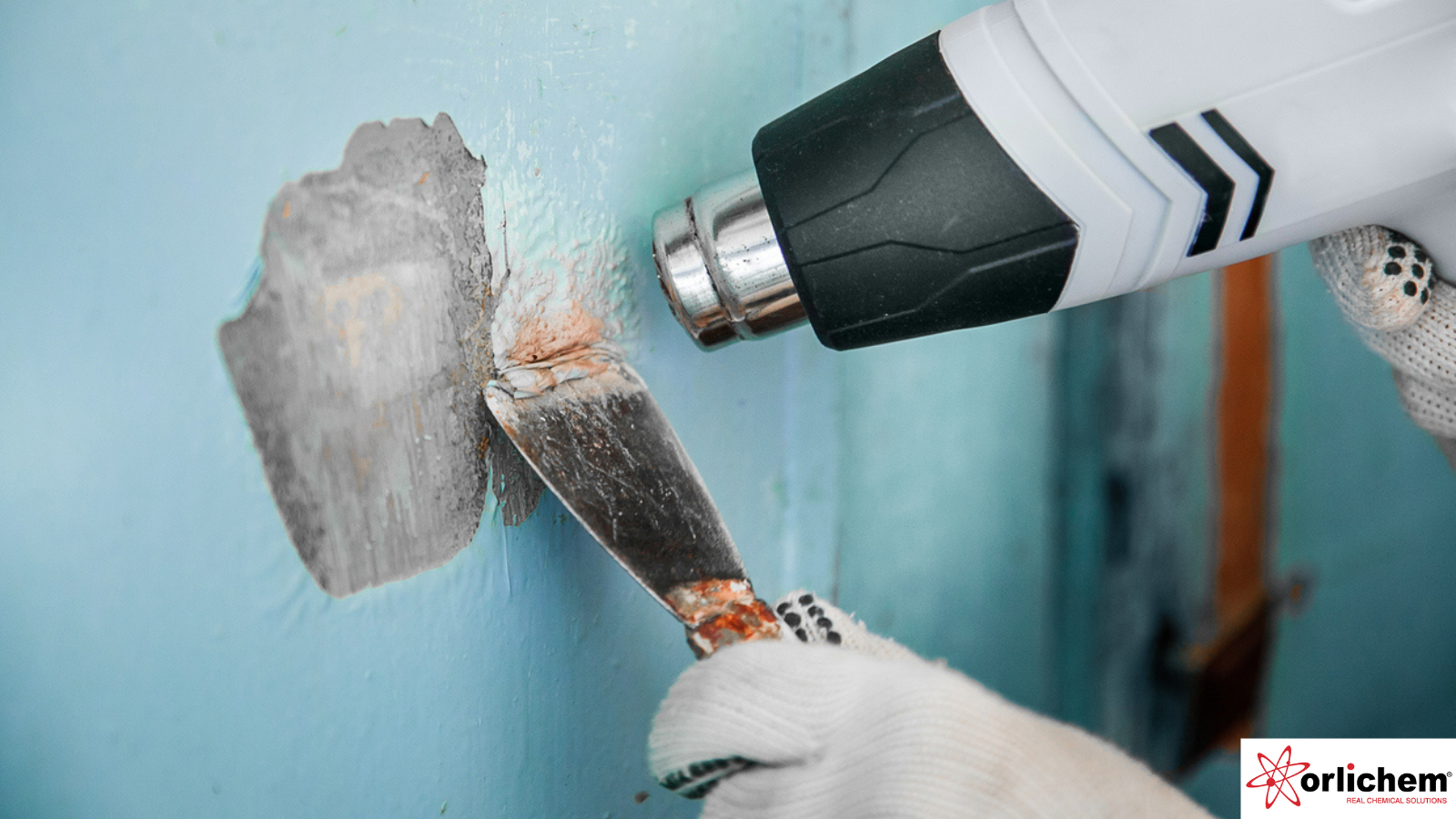
Paint removal sounds like a small job until it interrupts a production line. In engineering workshops across Gauteng, KZN and the Western Cape, a repaint may be triggered by corrosion, coating failure after a chemical spill, or a change in livery. The decision on how to strip paint in engineering workshops determines how long assets are out of service, whether adjacent equipment is exposed to risk, and how well the new coating adheres.
Maintenance reliability sits at the heart of this. Poorly stripped substrates trap residues and underfilm corrosion that reappear months later as blistering or peeling. The cost is never just the coating. It’s lost capacity, rework and safety exposure. That is why safe paint removal in South Africa is increasingly being treated as a controlled process, not a rushed chore.
Repainting is an opportunity to reset the asset’s protective system—if the surface prep is right. Clean, chemically neutral and profile-appropriate metal gives primers and topcoats a fair chance to reach design life. Skipping steps to gain a day this week often costs a week next quarter.
Engineering teams are asked to shorten turnarounds without expanding risk. Choosing what chemicals strip paint safely—and deploying them with discipline—has become a competitive capability for maintenance managers and contractors.
Workshop reality rarely matches datasheets. You’ll see stacked film-builds—original primer, two rounds of touch-up enamel, and a high-build epoxy from a rushed repair. Add mixed substrates (mild steel brackets, aluminium guards, galvanised cable trays) and you’re solving different chemistry on one frame.
Solvent vapours, caustic spray, hot-water rinsing and slurry handling seldom coexist comfortably with people, forklifts and welding bays. Ventilation, ignition control and routing foot traffic become part of the stripping plan, not an afterthought.
Stripped coatings, emulsified oils and neutralised rinse water create a waste stream that must be contained, classified and handed to licensed disposal. Improvised drains and ad-hoc decanting are an invitation to enforcement action and reputational harm.
There isn’t a single “best” paint stripper. There are families of chemistries and formats whose suitability depends on coating type, substrate, geometry and constraints.
These soften resins quickly, helping release epoxy, polyurethane and alkyd systems. They’re often chosen for heavy film-build and complex profiles. The trade-off is vapour management and flammability control, with strict attention to PPE and ignition sources.
Caustic formulations attack certain binders and saponify oils, lifting many enamels and grease-contaminated films. They can be highly effective on steel fixtures and jigs. The watch-outs are substrate compatibility (especially aluminium, zinc and galvanised parts), splash hazards and the need for thorough neutralisation before repainting.
Where oxides and mill scale complicate removal, acidic assistance can help, but it carries a higher corrosion risk to the base metal if mishandled. These routes demand tight control of dwell, immediate rinsing and passivation—and are often reserved for specific, controlled applications.
On vertical frames, ducts and housings, gels reduce run-off and keep actives where they’re needed, improving efficiency and reducing mess. They buy time, which buys safety.
Whatever the route, the disciplined habit is a small test panel first. Confirm dwell time, scraping effort, rinsing, substrate impact and odour/ventilation needs. Then scale up with confidence.
Explore the engineering context, chemical families and application scenarios on Orlichem’s Engineering industry page.
Picture a Johannesburg workshop planning to refresh safety-yellow machine guards over a long weekend. The maintenance manager convenes production, SHEQ and contractors on Thursday afternoon. No clipboards yet—just agreement on what success looks like Monday 06:00: guards dry, neutral, dust-free and ready for primer.
Areas are cordoned off with clear pedestrian routes. Hot work permits are paused on the adjacent bay. The contractor does a toolbox talk: eye/face protection, gloves and forearms covered, aprons where splashes are likely, and the “three-bucket” rule—clean, contaminated, and waste segregation—explained like a recipe.
A gel stripper is trialled on a 300 mm section: apply, wait eight minutes, lift with a pull-scraper. The first lift reveals three layers; the second pass clears to primer. Rinse-wipe checks show no colour on the cloth. The team records dwell times and decides to work in squares, two lifts per square, three operators rotating to control fatigue.
The operators work top-down to avoid drips onto clean sections. Drip trays catch run-off; absorbents sit under bearings and rails. Where stubborn corners resist, heat is avoided—more dwell, not more heat. Supervision focuses on pace, not heroics. The goal is consistent squares, not speed bursts.
An alkaline route on some jigs requires neutralisation until pH-neutral at the surface. Rinse water is contained; wastewater drums are labelled for collection. Compressed air chases water from crevices, then clean rags damp-wiped ensure no residue.
Before knock-off, the supervisor signs off on “metal cleaning before repainting”: the surface is sound, bright where required, lightly abraded for profile and free from chalky residue. A clean-hand test leaves no dust or smear. The area is handed to the coating team with a solvent-wipe protocol and primer window agreed.
South Africa’s Occupational Health and Safety Act (OHSA) and the Hazardous Chemical Substances Regulations require risk assessment, SDS availability, training, exposure control and medical surveillance where applicable. Stripping work should sit under a documented safe operating procedure and a permit regime where risk is elevated.
Relevant SANS standards guide PPE selection, chemical labelling, storage cabinets and ventilation rates. In a practical sense: ensure containers are labelled, decanting is controlled, eyewash stations are live, and ventilation is verified, not assumed.
Neutralised rinse and sludge are waste, not “dirty water.” Classification, containment and hand-over to licensed waste handlers close the loop. Keep the transport manifest; SHEQ audits will ask.
Engineering workshops servicing port assets or dockside repairs should consider Transnet National Ports Authority (TNPA) protocols and South African Maritime Safety Authority (SAMSA) safety expectations when work moves quayside. What is routine in a plant can be restricted near a berth.
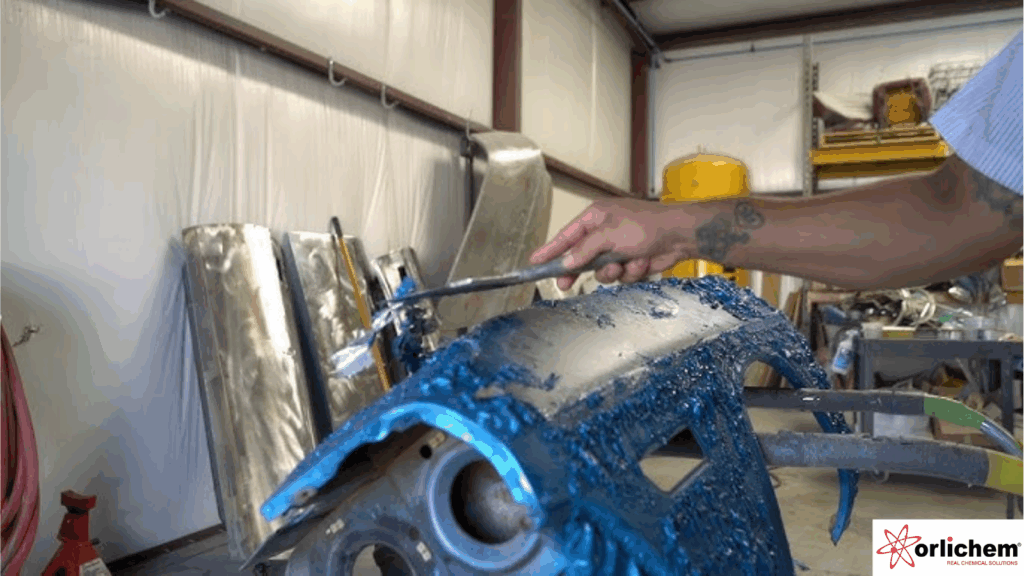
A Cape Town contractor stripped and repainted steel frames that looked clean. Two months later, blistering appeared. Root cause: alkaline residue left in seams under a cross-brace. Fix: mandatory pH-neutral swab checks at representative points, logged before hand-over.
A Gauteng workshop cleaned cast housings without masking. Capillary action drew softened coating and sludge into the bearing seats. The downstream vibration cost dwarfed the stripping job. Fix: pre-masking and absorbent wraps as standard work for rotating parts.
A solvent stripper performed brilliantly on epoxy panels and disastrously on galvanised trays, leaving a darkened, reactive surface. Fix: split the job by substrate and film type. One bay, two chemistries, documented.
Every stripping decision sits inside a simple equation: rework risk versus time pressure. Rushing dwell times, skipping neutralisation or improvising ventilation might claw back hours today, then cost days when the new coating fails. Conversely, over-engineering controls in low-risk corners wastes capacity. Mature teams codify their approach: classify the job, choose the route, prove it on a patch, then execute at pace.
When the stakes include safety colours, machine guards and access equipment, the risk tolerance narrows further. Paint is part of the protection system. Treating how to strip paint in engineering workshops as controlled maintenance is not red tape—it’s asset integrity.
If you’re reviewing your stripping approach, begin with a short workshop: define typical coatings in your plant, list substrates, agree success criteria, and map your ventilation and waste routes. Then select the appropriate chemistry and format—gel, liquid, alkaline or solvent-activated—and prove it on a square foot.
For guidance that fits your asset mix and production schedule, visit Engineering (Industry).
The safest option depends on coating type, substrate and constraints. Solvent-activated strippers lift tough epoxies quickly but demand vapour control. Alkaline routes suit many enamels and greasy film-builds, with careful neutralisation. Gels reduce run-off on verticals. Always patch-test and follow SDS guidance under OHSA and SANS requirements.
Residues cause most failures. Neutralise alkaline routes to pH-neutral at the surface, rinse thoroughly, force-dry crevices, and perform a clean-hand test. Light abrasion restores profile. Agree a solvent-wipe and primer window with coatings teams. Document your checks before hand-over to avoid ambiguity.
It’s risky. Steel, aluminium and galvanised components respond differently. Split the job by substrate and coating. Use gel formats to control dwell on verticals and protect adjacent assets with masking and absorbents. When in doubt, test different chemistries side-by-side on small areas and inspect the base metal.
Under OHSA and the Hazardous Chemical Substances Regulations you must assess risk, train staff, provide PPE, control exposure, and keep SDS on hand. SANS standards guide labelling, storage and ventilation. Waste must be contained, classified and transferred to licensed handlers with documentation retained.
Not always. Chemical routes excel where blasting would damage equipment, create dust or demand costly containment. Blasting still has a place for heavy corrosion or profile restoration on robust components. Many workshops combine methods: chemical to break the film, light mechanical action to finish and re-profile.
Paint stripping is a small job with outsized consequences. The difference between a durable repaint and a costly redo is rarely the tin you buy; it’s controls, discipline and the right chemistry for the job. When you treat stripping as controlled maintenance, you protect uptime, operators and budgets.
Need a site-specific recommendation that balances safety, speed and compliance? Explore Orlichem’s Engineering resources or contact us today for expert advice.


 Previous