July 28, 2025

South Africa’s plants run hard: high heat, dust, coastal humidity and cyclic loads push steel to its limits. Add sporadic shutdown windows and tight procurement cycles, and corrosion becomes more than an eyesore — it’s a productivity tax. Poor metal preparation before painting undermines coatings, accelerates underfilm corrosion and forces repeat work. For maintenance managers and contractors under pressure to keep lines running, getting how to clean rust off metal right is one of the fastest ways to protect asset life and keep reliability metrics on track.
In engineering environments — from fabrication shops in Germiston to process plants in Richards Bay — effective rust removal and surface preparation standards in South Africa are integral to paint adhesion, NDT accuracy on reconditioned parts, and the integrity of bolted joints. The difference between a quick grind-and-go and a disciplined chemical-and-mechanical prep can be months (even years) of coating performance.
When the shutdown clock is ticking, it’s tempting to skip degreasing, rely on a wire brush, and paint over residual oxides. The result? Coating holidays, flash rust, and blistering within weeks — especially on coastal or steam-laden lines.
There is no universal “best chemical for rust removal.” Mismatch acidic or neutral solutions to your substrate, residue load, and downstream coating system and you risk flash rust, etching, or contamination that compromises primer cure.
Safe rust removal in engineering isn’t only about gloves and goggles. It’s about ventilation, controlled application, correct neutralisation, and ensuring that residues won’t react with zinc-rich or epoxy primers. Skipping these steps creates invisible failure points.
Picture a packaging plant scheduling a 24-hour stop to refurbish a steel conveyor support frame and adjacent mezzanine. The maintenance manager lines up materials, contractors, and QA. The success of the paint job will come down to disciplined surface prep — executed like a mini project.
Degrease before you de-rust
Oils, cutting fluids and airborne grime shield corrosion and block chemistry. Begin with a compatible industrial degreaser and hot-water rinse. Working from top to bottom prevents recontamination. Avoid leaving surfactant residues; rinse to conductivity targets agreed with your coating supplier.
Select the right rust-removal method
Pro tip: For mixed sections (angles, welds, and crevices) a hybrid approach works best: chemical gel into crevices, mechanical on flats, then a unifying passivation step.
Passivation and neutralisation
Acid-based removers dissolve iron oxides but can leave the surface active. Follow manufacturer guidance to neutralise and, where recommended, apply a passivating rinse that converts remaining oxides into more stable forms. This reduces flash rust between prep and primer.
Moisture and timing
Even a perfectly cleaned surface will flash if humidity spikes or prep-to-prime intervals stretch. Stage your work: complete small zones fully (clean ? de-rust ? neutralise ? dry ? prime) rather than exposing large areas for hours. Use dehumidifiers or gentle heat in high humidity.
Surface profile matters
Coatings anchor mechanically. Ensure the right microroughness for the specified primer (consult your paint system TDS). Chemical-only methods may clean but not profile; consider light mechanical keying on flat sections after chemical treatment if the primer requires it.
Final verification before primer
Perform a clean rag test (no staining), check for soluble salts (where critical service demands it), and verify dryness. Then prime within the manufacturer’s maximum recoat window. Painting onto a chemically “clean” but physically smooth or damp surface is a common cause of early failure.
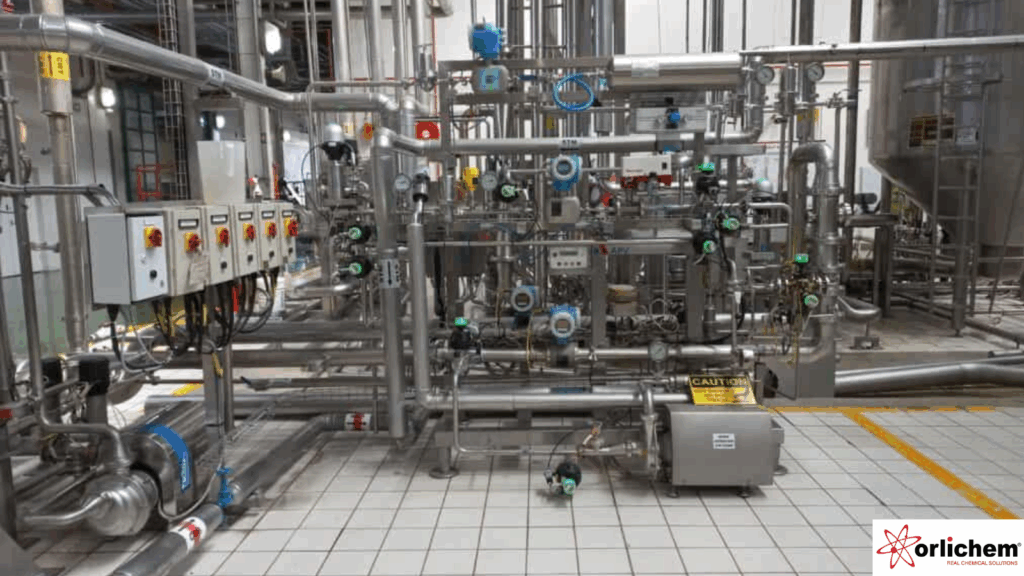
South African engineering sites typically align with OHSA requirements for safe chemical handling, ventilation, PPE and training, while quality teams reference applicable SANS/ISO surface preparation and coating application practices adopted locally. For contractors working in port or marine-adjacent facilities, TNPA site rules often govern blasting zones, containment and waste control, while SAMSA requirements may apply to marine assets undergoing work in dock.
What matters is demonstrating a defensible process: documented chemical selection and SDS, training records, waste disposal manifests, atmospheric measurements (where volatile products are used), and coating inspection reports (cleanliness, profile, DFT). This is the paperwork auditors and insurers expect — and what protects you if a coating fails prematurely.
Explore engineering-focused resources and solutions:
People and plant safety
Match PPE to chemistry (gloves rated for acids/solvents as applicable), ensure eyewash stations are operational, and conduct pre-work toolbox talks covering spill response and neutralisation. Ventilate confined areas and monitor exposure where vapours are possible.
Substrate and process safety
Avoid aggressive acids on sensitive alloys or galvanised components unless explicitly approved. Protect adjacent assets — electrics, seals, bearings — from run-off. Mask and contain; do not let acid or rust-laden washwater find drains without treatment.
Waste and environmental duty
Collect and neutralise acidic/alkaline residues. Decant solid contaminants for compliant disposal. Keep signed manifests. In port precincts or food facilities, expect stricter sampling and disposal verification.
There’s no one-size-fits-all “best chemical for rust removal.” The smart path is to map your situation:
If your next stop is a zinc-rich primer, test for residual acidity or phosphates that could interfere with cure. When in doubt, run a small coupon trial — it’s cheaper than rework.
A contractor in KZN stripped and painted 600m of handrail during a winter shutdown. Work started with power brushing and solvent wipe. Within three weeks, rust blooms tracked along weld toes. The root cause analysis showed salty condensate trapped under the primer due to high overnight humidity and a skipped passivation step. The fix — de-rust, passivate, dehumidify, then prime in smaller zones — kept the second attempt sound through the following summer. Small sequencing changes; big reliability gains.
Every repaint has a hidden P\&L. Poor prep doesn’t just cost cans of paint; it eats scaffolding hours, hot work permits, QA time and production slots. Done well, rust removal and surface prep:
In a market where price pressures are constant, maintenance reliability & plant efficiency are your competitive levers. Invest in prep; save on rework.
Engineering teams don’t need a chemistry degree to win against rust. But you do need a trusted partner who understands substrates, coatings, and site realities. Orlichem’s engineering team works daily with SA plants to design pragmatic, compliant cleaning and preparation workflows that fit real shutdowns — not lab schedules. See the links above for sector context and rust-removal options relevant to fabrication, structural steel and plant maintenance.
What’s the safest way to remove rust in a live plant?
Choose controlled methods: degrease, targeted chemical gel on affected areas, thorough neutralisation, and rapid dry before spot-priming. Contain run-off, ventilate well, and protect electrics. For heavy corrosion, isolate and use mechanical prep with enclosure and extraction to limit airborne particulates.
How do I prepare metal before painting to avoid early failure?
Clean first, then de-rust, then passivate/neutralise. Verify dryness and required profile for your primer. Paint in small, fully completed zones to limit flash rust. Check cleanliness (rag test) and, for critical service, soluble salts. Prime within the coating’s recommended window.
Which chemical is best for rust removal?
“Best” depends on your metal, geometry, contamination and the next coating layer. Gels cling to verticals; liquids suit immersion or rinseable areas; mechanical plus chemical suits heavy scale. Always confirm compatibility with your primer system and run a small on-site test panel.
How do South African standards apply to surface prep?
Sites align with OHSA for safety and use SANS-adopted practices for surface cleanliness and coating application. In ports, TNPA rules govern containment and waste; marine assets can fall under SAMSA. The key is documented procedures, training, and inspection records to prove due diligence.
How do I control flash rust between cleaning and priming?
Work in smaller zones, manage humidity with dehumidifiers or gentle heat, and use passivating rinses where appropriate. Prime as soon as surfaces are dry and verified clean. Avoid overnight exposure of bare steel in high-humidity or coastal conditions.
Rust will always try to win — but disciplined preparation, sensible chemistry and compliant processes give engineering teams the upper hand. Frame surface prep as a reliability initiative, not a paint chore, and your coating systems will last longer, look better and demand fewer shutdowns.
Need help choosing and sequencing rust removal methods for your site?
Speak to Orlichem’s engineering team for practical guidance on chemistry selection, process design and compliance documentation.
Tel: +27 21 932 6457 • Email: orders@orlichem.co.za
Explore: Engineering industry • Rust removal • Rust Remover product


 Previous