
South Africa’s ports—Durban, Cape Town, Gqeberha (Port Elizabeth), Saldanha and Richards Bay—are unforgiving environments for electrical systems. Salt-laden air creeps into panels. Fine coal or ore dust settles into switchgear. Humidity and temperature swings invite condensation inside junction boxes. In this context, how to clean electrical systems on ships is not a niche maintenance question; it’s a frontline reliability and safety issue.
For operators juggling tight berth windows and charter commitments, an avoidable trip fault in a propulsion control cabinet can translate into tug delays, missed cargo slots and contractual penalties. For ship repair yards, the stakes are equally high: rework and schedule slippage because an “easy” clean went wrong. Crews want safe, repeatable ways to restore equipment, not shortcuts that increase risk.
The local backdrop matters. Transnet National Ports Authority (TNPA) sets the tempo at quayside and dry-dock, while SAMSA guides maritime safety expectations. On board, the Occupational Health and Safety Act (OHSA) and relevant SANS standards shape safe systems of work. A compliance-led approach that respects these frameworks is essential—not only to keep crews safe, but to keep vessels on schedule.
Salt mist is hygroscopic: it attracts and holds moisture. On printed circuit boards (PCBs), terminal strips and busbars, that thin, almost invisible layer can become a conductive path when humidity rises, leading to nuisance trips or, worse, progressive corrosion. Add a film of oil from engine-room air and you have the perfect dirt binder.
Even with main breakers open, stored energy in capacitors and VFD DC links can surprise the unwary. “Dead” circuits can revive during testing or back-feed through unexpected paths. Cleaning actions that disturb debris can shift particles into sensitive components.
Aggressive solvents can craze polycarbonate windows, dull labels and compromise conformal coatings. Water-based cleaning around unsealed components invites latent moisture problems. The best practices for electrical cleaning on vessels always include checking OEM guidance and material compatibility before touching a panel.
It’s a winter morning at the Cape Town repair quay. A coastal cargo vessel is alongside for 48 hours. Part of the work list: intermittent alarms and trips in the main switchboard and auxiliary MCC. The yard’s marine electrician, Thabo, is paired with a SHEQ officer and a junior tech for the job.
First, control the energy. Thabo’s team leads with permits and lock-out/tag-out. They verify isolation, hang locks, and test for absence of voltage. The SHEQ officer checks ventilation and atmosphere monitors—cleaning chemistry will be used, and they want zero surprises in an enclosed space.
Open, assess, and dry clean first. With panels open, they start “dry”: ESD-safe brushes, vacuum with an antistatic hose, and lint-free wipes lift loose dust and salt bloom. The goal is to remove as much contamination as possible before any liquid touches the electronics. Cables are gently re-dressed; loose ferrules and nicked insulation are flagged for later.
Choose chemistry with intent, not habit. For contact areas and PCB edges that show oily grime, Thabo specifies a fast-evaporating, non-conductive, residue-free electrical cleaner—plastic-safe and designed for how to clean ship electrical equipment without leaving films behind. He avoids flooding: it’s controlled application with precision nozzles and ESD-safe swabs. The junior tech learns why: capillary action can wick liquid under components; less is more.
Manage flammability and vapour. Where a solvent is flammable, they treat the panel like a hot-work adjacency: no ignition sources; intrinsically safe lighting; continuous ventilation; vapor levels monitored. PPE is practical—gloves that resist the chosen solvent, eye protection, and antistatic clothing. The SHEQ officer oversees the chemical safety data sheet and spill kit readiness.
Help the evaporation, then inspect. After spot-cleaning, they promote drying with clean, oil-free compressed air at low pressure, then wait. Patience prevents re-deposition. Under magnification, they inspect for lifted traces, softened labels or residues—imperfections that often cause “ghost faults.” Terminal torque checks and insulation resistance tests follow, not to tick boxes but to confirm the panel is truly ready.
Re-energise like a pilot. Power-up is staged with observers at the panel and at the HMI. They watch temperatures, listen for hums, and run a basic load test. The nuisance trips don’t return. Downtime avoided; lessons captured.
Electrical Cleaning on Ships: This narrative hides a simple truth: safe cleaning of marine electrical systems is less about the liquid in a can and more about the discipline around it—permits, isolation, chemistry choice, application control, and verification.
When crews talk about chemical cleaners for electrical maintenance, they’re really weighing trade-offs:
Whatever you choose, test on a small, inconspicuous area and check the OEM manual. And remember: never use water-based cleaners on energised or unsealed electronics; even “dry” residues can come back to bite when humidity spikes.
For a focused range suited to the marine environment, see Orlichem’s Marine industry overview, and a purpose-designed electrical cleaner.
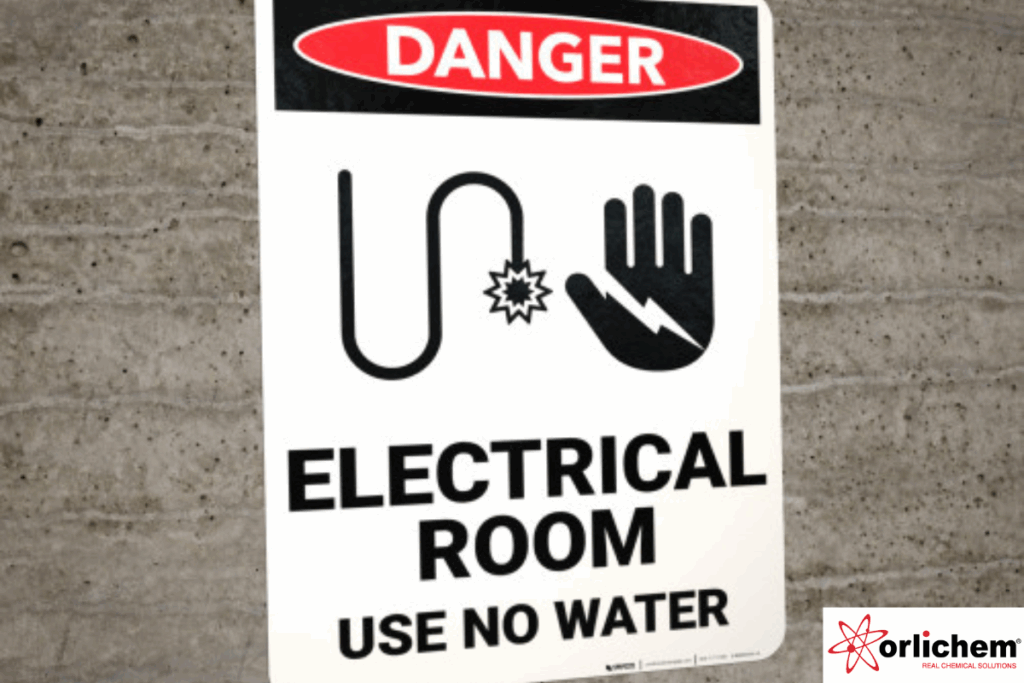
South African operators work under a layered framework:
Compliance isn’t about paperwork—it’s about consistency. A clear job plan, a named person in charge, and evidence of inspection before re-energising are the habits that keep people and schedules safe.
These aren’t war stories—they’re reminders that best practices for electrical cleaning on vessels are built from small, disciplined choices.
An efficient electrical clean is invisible to the schedule; a poor one is painfully visible. Every hour in dry-dock or under shore power accrues cost. Rework multiplies labour and delays class inspections. By standardising how to clean ship electrical equipment—permits, isolation, dry-then-wet methodology, correct chemistry, verification—operators buy back time where it counts: on the sailing plan.
More importantly, disciplined cleaning underpins safety culture. Panels that are clean, dry and properly labelled are easier to fault-find and safer to work in. That reduces cognitive load for crews under pressure and shortens the path from fault to fix.
If your maintenance plan treats electrical cleaning as “wipe and hope,” it’s time to reset. Map your critical panels, design a standard operating sequence, train teams on chemistry selection and application control, and embed checks before re-energising. For marine-ready options and guidance, explore Orlichem’s Marine industry overview and Electrical Cleaner.
Start with energy isolation and verification, then remove loose contamination using ESD-safe brushes and a vacuum. For stubborn grime, apply a non-conductive, residue-free, plastic-safe electrical cleaner sparingly with swabs or a controlled spray. Promote evaporation with clean, dry, oil-free air, then verify torque, insulation resistance and function before re-energising.
They can be, but only under strict controls: permits, no ignition sources, continuous ventilation and vapour monitoring where appropriate. Treat the task like proximity to hot-work conditions. If flammability controls aren’t feasible, consider a non-flammable alternative that’s still residue-free and plastic-safe, and adjust drying times accordingly.
Avoid water-based cleaners on unsealed electronics. Moisture can wick under components and linger, creating latent faults when humidity rises. If OEM guidance explicitly allows a specific water-based product on certain housings, follow it—but for PCBs and contacts, fast-evaporating, non-conductive solvents are the safer default.
Expectations are shaped by SAMSA (vessel safety management), TNPA permit regimes, OHSA duties for chemical handling and PPE, and relevant SANS standards for isolation, signage and electrical work practices. Your class society and OEM manuals add further requirements—plan work so all obligations align.
Frequency depends on operating environment and duty cycle. In salty, dusty or oily atmospheres—engine rooms, open decks, cargo holds—inspection intervals should be shorter, with proactive dry cleaning and targeted solvent cleaning during planned maintenance. Use fault history and environmental exposure to set the pace rather than a fixed calendar.
Clean, dry, well-labelled electrical systems are the quiet backbone of reliable marine operations. In South Africa’s salt-rich port environments, getting electrical cleaning right—disciplined isolation, smart chemistry, controlled application and compliance—pays back in schedule certainty, safety and lower lifecycle cost.
If you’re updating procedures or building a standard kit for your crews, explore Orlichem’s marine-ready range: the Marine industry overview. Contact us today, our team can help you align product choice with your permits, OEM guidance and onboard realities.


 Previous