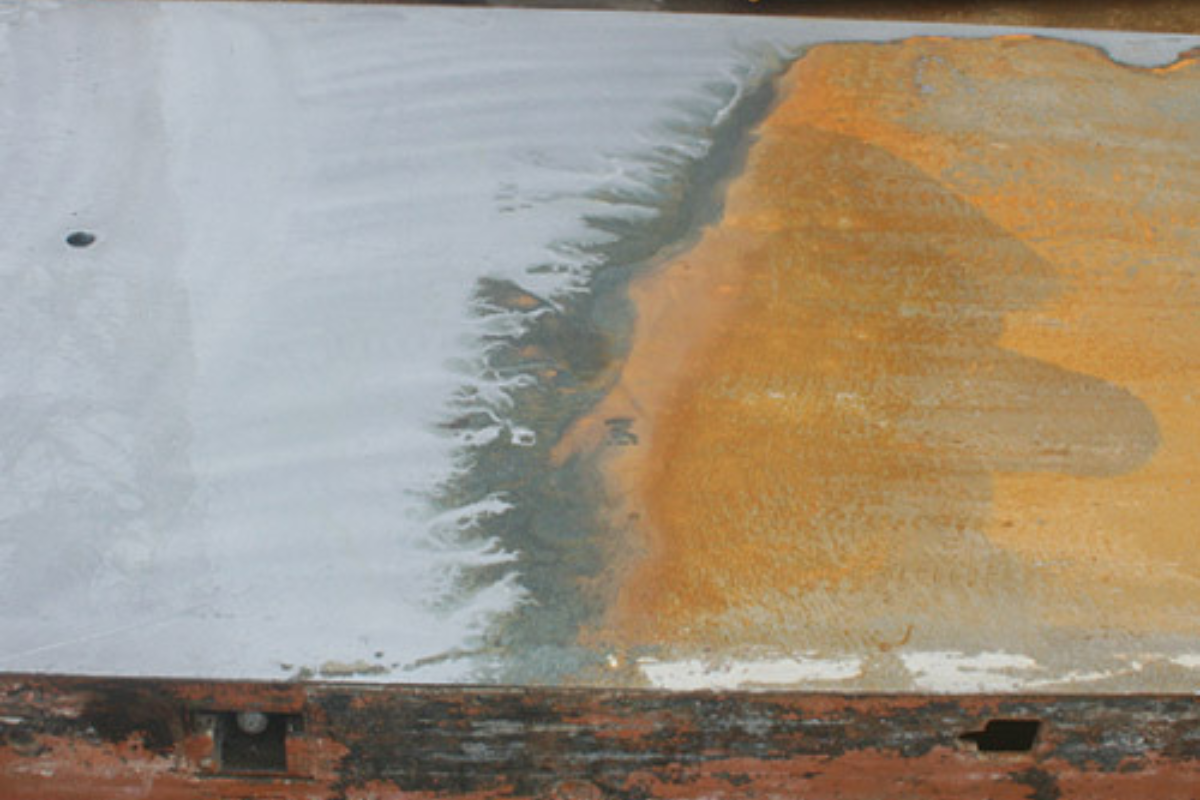
South Africa’s industrial backbone—from fabrication shops in Ekurhuleni and Durban’s ship repair yards to mining concentrators in Rustenburg and Saldanha’s steel logistics—runs on metal assets. Corrosion is their constant adversary. Iron oxides and corrosion by-products pit equipment, weaken welds, seize fasteners, contaminate product surfaces, and force rework. Left unchecked, rust drives up maintenance budgets, extends turnarounds, and erodes asset life. In a margin-tight environment with load-shedding, supply chain volatility and pressure on uptime, the question isn’t whether to remove rust—it’s how to remove rust in industrial facilities efficiently, safely and repeatably.
Engineers know the dilemma well: one shift uses mechanical abrasion to “get it done”, the next switches to aggressive acids to keep up with schedule. Meanwhile SHEQ flags fumes, wastewater, and PPE compliance, and procurement wants proof that the method won’t destroy base metal or violate standards. This article unpacks what is the safest rust removal method, where each approach excels, and how to embed a step-by-step rust cleaning guide for factories that meets South African compliance expectations.
For sector-specific guidance on alloys and finishing pathways, see Orlichem’s Metal Treatment hub: Metal Treatment, Steel, Stainless Steel, Aluminium & Alloys, and Copper.
Rust rarely appears on the weekly KPI dashboard—but it influences almost all of it. Paint delamination leads to repeat blasting and coating. Surface contamination drives welding defects. Seized studs extend critical-path maintenance. In food, pharma and FMCG, corroded frames and guards raise hygiene non-conformances. In mining and marine, corrosion under insulation (CUI) and atmospheric pitting trigger unscheduled interventions. The compounded cost is downtime, rework, scrap, and project slippage—exactly what plant managers are paid to avoid.
Mechanical approaches—needle-gunning, wire brushing, sanding, flap discs, and abrasive blasting—are fast and controllable. They shine on heavy scale, structural steel prep, weld zones and edges. The trade-offs: operator exposure to noise, vibration and dust; risk of profile damage on thin gauge metals; and potential embedment of blast media if QA isn’t tight. In confined spaces, dust control and extraction are more than hygiene—they’re safety.
Best for: Thick scale, structural steel, pre-paint prep, weld dressing.
Watch-outs: Dust and noise; consistent surface profile; post-cleaning passivation on stainless.
Chemical derusting dissolves iron oxides selectively, reaching pits and threads where abrasives struggle. Acidic systems (e.g., inhibited mineral/organic acids) act quickly; chelating formulations remove rust more slowly but are often safer for operators and substrates. Gelled or thixotropic chemistries adhere to verticals and overheads, reducing run-off.
Best for: Complex geometries, threads, tight assemblies, low-profile preservation, shop-floor repeatability.
Watch-outs: Acid fumes and hydrogen evolution in poorly ventilated areas; neutralisation and wastewater handling; base-metal attack if inhibitors or dwell times are mismanaged.
In controlled workshop environments, electrochemical approaches can de-rust and re-passivate certain alloys. For stainless steel, post-abrade/passivation steps restore chromium oxide films that confer corrosion resistance. Pickling-passivation systems, when correctly specified and neutralised, reduce long-term rust bloom and flash rust.
Best for: Stainless assemblies, high-spec fabrications, QA-critical sectors.
Watch-outs: Strict process control, effluent treatment, and trained operators.
Rust converters change iron oxides to more stable compounds, creating a paintable surface when full removal isn’t practical. They’re useful during short maintenance windows or in remote field conditions.
Best for: Interim stabilisation, remote sites, cost-constrained repairs.
Watch-outs: Not a substitute for full substrate preparation in demanding service; coating compatibility must be confirmed.
A fabrication manager in Germiston recently shared a lesson: switching from aggressive grinding to a chelating gel on thin-wall stainless assemblies cut rework by half and preserved dimensional tolerances. The team first mapped alloys—mild steel for frames, 304 for covers, 316L for contact parts—and matched removal methods to each. That simple upstream decision avoided heat tint, micro-gouges and later hygiene flags.
In coastal plants, flash rust can appear within minutes after wet cleaning. The winning teams plan the whole arc: derust ? rinse/neutralise ? dewater ? passivate or prime. They use demineralised water for final rinses on stainless, alcohol-based water displacers on carbon steel, and get the first coating layer on before the tea break—because surface chemistry waits for no one.
SHEQ leads in Richards Bay highlighted a pattern: outcomes improved the day the crew got the right PPE and ventilation for the chosen chemistry, rather than generic controls. For acidic systems, that means splash shields, chemical gloves, aprons, and local exhaust. For mechanical removal, it means hearing protection, anti-vibration planning, dust extraction and tight housekeeping. The safest method isn’t only about chemistry—it’s about the environment you create for it.
Waste handling separates compliant operations from risky ones. Neutralise spent acids, filter solids, segregate metal-laden effluents, and label drums accurately for disposal. Water-based systems still carry contaminants—“green” does not mean “drain-safe.” Treat wastewater and keep manifests tight.
Under the Occupational Health and Safety Act (OHSA), employers must identify hazards and implement controls—covering chemical handling, ventilation, PPE, and training. Relevant SANS guidance (e.g., corrosion protection, surface prep and coating application standards) anchors QA and inspection. Treat these as your non-negotiables: method statements, SDS awareness, and confined-space permits where applicable.
Marine and port-side work introduces additional controls. The South African Maritime Safety Authority (SAMSA) requires safe hot-work, chemical use, and waste handling on vessels and in ship repair contexts. Transnet National Ports Authority (TNPA) imposes site-specific rules on spill prevention, effluent, and contractor compliance. If your rust removal touches vessels, quays, or dock workshops, align your work packs with these frameworks and pre-clear methods with site safety.
Whether you operate under municipal bylaws or national environmental frameworks, effluent discharge and hazardous waste management are enforceable. Document your neutralisation, capture solids, and use certified waste contractors. In practice: keep a simple log—bath pH before/after, volume, neutralising agent, and disposal reference.
A Gauteng FMCG plant struggled with weekly rework on mild-steel frames: rust bleed-through under coatings, loose fasteners after aggressive grinding, and hygiene non-conformances at audits. Rather than chase symptoms, the engineering lead reframed corrosion as a process.
Within two months, rework dropped, audit findings disappeared, and the maintenance backlog began to shrink. That is why rust removal is critical in SA industries: it’s not just about clean metal—it’s about predictable reliability.
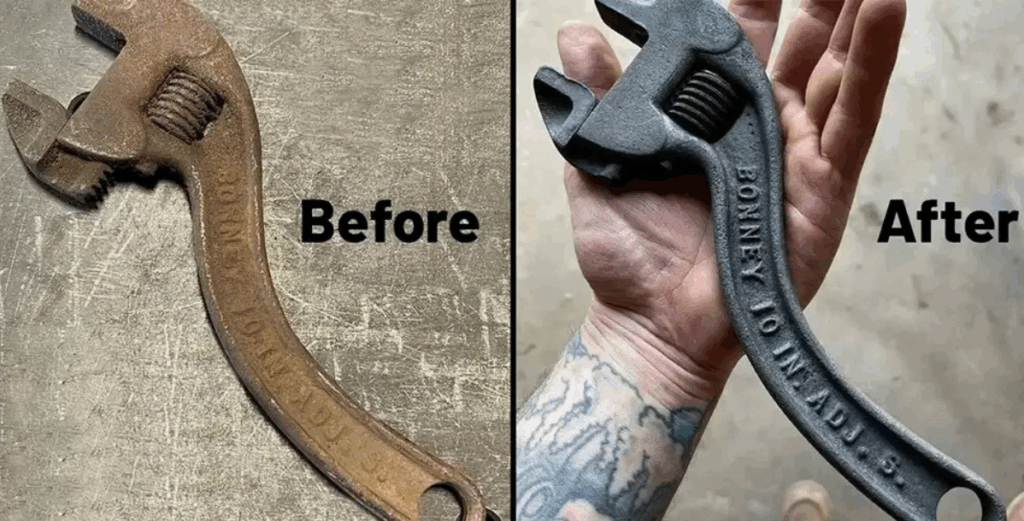
Use alloy-specific pathways. For guidance on different metals and their finishing routes, refer to Orlichem’s pages for Steel, Stainless Steel, Aluminium & Alloys, and Copper.
Inhibitors protect base metal while dissolving oxides. They open a window for operators to achieve thorough rust removal without unnecessary attack, particularly on machined parts and thin sections.
The best practices for industrial rust prevention start with design: avoid crevices that trap moisture, select the right coating system for the environment, and isolate dissimilar metals. After removal, stabilise surfaces: passivate stainless; prime steel promptly; verify coating compatibility.
Write short, visual SOPs. Teach the “why” behind dwell times, neutralisation, and final rinses. The safest and most effective shops empower artisans to stop a job when conditions slip out of spec.
There’s no universal champion. What is the safest rust removal method depends on alloy, geometry, environment, and workforce skills. In a ventilated workshop with tight effluent control, inhibited acid or chelating gels can be both safe and precise. On a heavy structural refurbishment with scale and coatings to strip, blasting is unbeatable—provided dust and rebound are controlled. In pharmaceutical or food lines, electrochemical/passivation steps may deliver the hygiene assurance your QA team needs.
The common denominator: a method you can control—safely, repeatably, and in compliance with OHSA, SANS, and site rules.
What’s the fastest way to remove heavy rust on structural steel?
For thick scale and broad surfaces, abrasive blasting or mechanical methods deliver speed and profile control. Ensure dust extraction, operator PPE, and post-blast QA. Follow with immediate priming to prevent flash rust, especially in coastal or humid workshops.
Are acid-based rust removers safe for factory use?
They can be, when inhibited, well-ventilated, and supported by PPE, spill control and neutralisation SOPs. Use trained operators, monitor dwell time, and manage effluent responsibly. Where possible, consider chelating chemistries for lower operator exposure and base-metal protection.
How do I stop flash rust after wet cleaning?
Control the post-clean sequence: neutralise, rinse with low-mineral water, displace moisture, and apply primer/passivation promptly. Temperature, humidity and airflow matter—plan application windows so coated protection happens before conditions cause re-oxidation.
Do stainless steels need rust removal and passivation?
Yes. Mechanical abrasion can disrupt the passive chromium oxide layer. After finishing, use appropriate passivation to restore corrosion resistance, followed by controlled rinsing. For more on stainless workflows, see Orlichem’s Stainless Steel guidance.
What documentation will auditors expect?
Auditors typically look for method statements, SDS access, PPE and ventilation controls, waste logs, and training records aligned to OHSA and relevant SANS guidance. In marine and port environments, align with SAMSA/TNPA site requirements and keep permits and manifests tidy.
South African plants that win against corrosion don’t improvise; they standardise. They pick the right method for the metal and geometry, lock in safety and effluent controls, and move seamlessly from removal to stabilisation. The payoff is fewer surprises in shutdowns, cleaner audits, and a reliability culture the whole organisation can feel.
Ready to standardise your metal treatment workflow?
Explore Orlichem’s industry pages for alloy-specific pathways and practical next steps:
Speak to Orlichem about rust-removal and prevention programmes tailored to your plant, QA requirements and shutdown windows.


 Previous