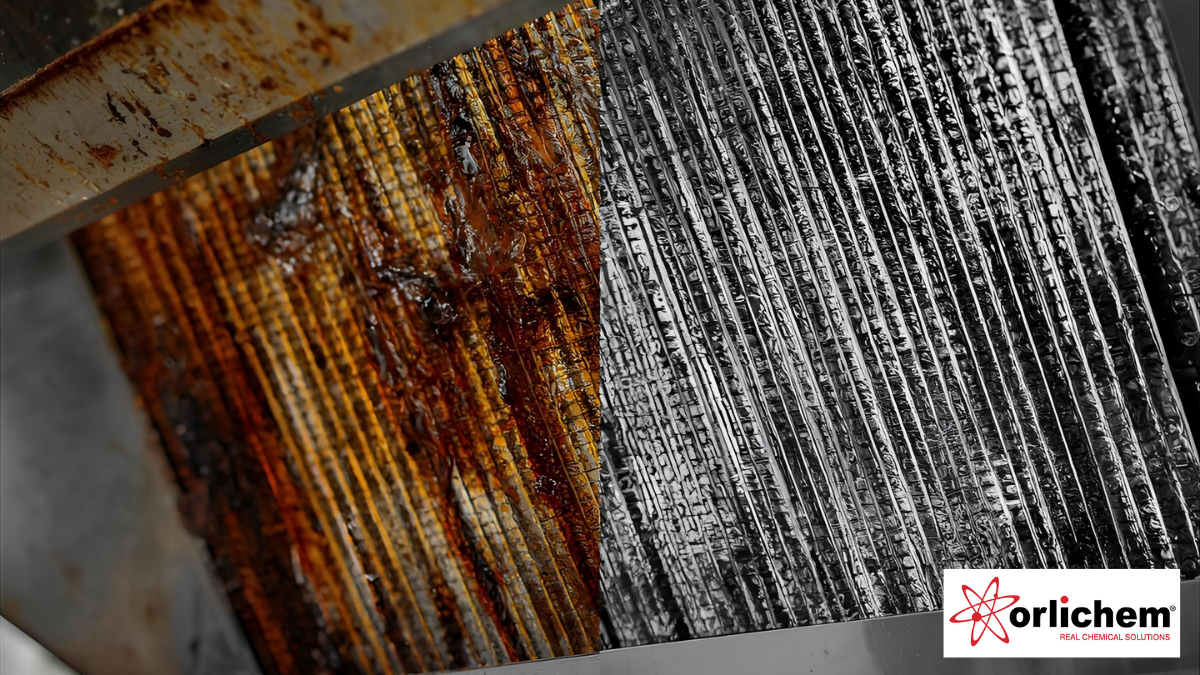
Grease removal in commercial kitchens is more than a housekeeping line item — it’s a safety, compliance, and brand-reputation issue. From quick-service outlets to large hotel banqueting kitchens, hardened fats and polymerised oils build up on hoods, ducts, floors, walls, and food-contact equipment. Left unchecked, this soil layer drives fire risk, slips and falls, equipment inefficiencies, and bacterial harborage — all of which can derail service, trigger non-conformances, and raise insurance exposure. For restaurant owners, kitchen managers, and food safety officers, safe grease removal is foundational to commercial kitchen hygiene and to keeping doors open during busy trading periods.
Kitchen grease isn’t one thing. It’s a composite soil — triglycerides from animal fats, vegetable oils, burnt proteins, carbohydrate residues, and airborne particulate that oxidise and “bake on” under heat. On hot metal (grills, fryers, extraction canopies), these soils polymerise into a varnish-like film. On colder surfaces (tiles, prep benches), grease stays tacky and traps dust.
Warm water can float fresh oil, but once soils oxidise, you need chemistry to break bonds, lift films, and keep them suspended long enough to rinse away. The right chemical approach targets the soil’s chemistry and the surface you’re protecting — stainless steel, aluminium, painted ductwork, grout, or food-contact plastic.
Alkalinity reacts with fats to form soap (saponification) and breaks peptide bonds in cooked proteins. In practice, caustic-boosted formulas cut through baked-on films in extraction systems, ovens, grills, and fryer surrounds. They deliver speed and “bite” — but demand respect for surface compatibility and safe handling.
Where it fits: Hoods and ducts, canopy filters, oven interiors, carbonised trays.
Watch-outs: Avoid strong caustic on aluminium and soft metals; protect seals and coatings; control contact time and rinse thoroughly.
Surfactants lower surface tension so water can wet the film, lift it off, and keep it dispersed. Neutral to moderately alkaline cleaners rely on clever surfactant blends rather than brute pH, making them versatile for daily wipe-downs on food-contact and high-touch areas.
Where it fits: Prep benches, splashbacks, walls, service counters, food-safe wipe-downs.
Watch-outs: Choose safe grease removal options for food-contact surfaces; follow label directions for rinse requirements.
Solvent boosters (including water-miscible solvents) help dissolve oily films quickly — useful on vertical stainless, glass, or painted surfaces where run-off is a problem. In many modern kitchen formulations, solvent content is balanced to reduce odour and speed evaporation.
Where it fits: Front-of-house glass near fryers, stainless façades, light films on verticals.
Watch-outs: Ventilation matters; check substrate tolerance and food-contact rules.
Enzymes like lipases “pre-digest” fats into smaller, more manageable fragments. In kitchens with continuous operations, enzymatic support in soak tanks or drains can reduce re-deposition and help with downstream FOG control, complementing primary cleaning chemistry.
Where it fits: Soak tanks for filters and utensils; drain maintenance; low-and-slow cleaning tasks.
Watch-outs: Temperature and pH windows must be respected; enzymes are not instant “strip-out” solutions.
Grease-laden canopies and ducts are ignition pathways. A flare-up on the line can flash into a canopy, and if duct interiors carry polymerised films, fire can propagate. Insurers and landlords increasingly ask for cleaning certificates and logs. Cleaning frequency and chemical selection are therefore risk controls, not mere chores.
Greasy floors are a leading cause of staff injury. More subtle is the hygiene risk: films on prep benches or cutting boards can shield microbes and frustrate disinfection. Effective, commercial kitchen hygiene routines sequence degreasing before sanitising, ensuring disinfectants reach the surface.
Grease removal in commercial kitchens: Every call-back to re-clean a fouled canopy or de-grease a fryer bank after hours pulls resources off revenue tasks. Poor chemistry choices inflate labour minutes, PPE consumption, and hot-water use. The right approach lowers total cost of cleanliness — fewer passes, shorter contact times, and better rinse-off.
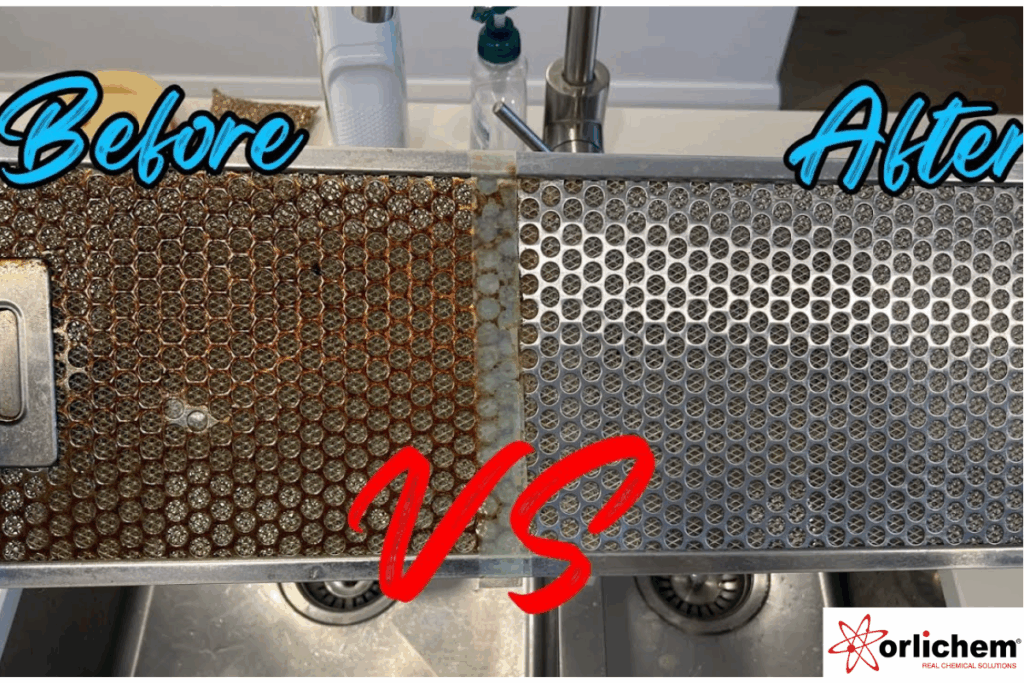
Picture a Friday service in a high-volume kitchen. The grill station lead closes the line at 22:00 and shifts into a zone-by-zone routine:
This rhythm isn’t about ticking boxes. It’s about flow — using chemistry that matches each surface and soil, keeping people safe and the kitchen compliant without stealing time from tomorrow’s mise en place.
South Africa’s Occupational Health and Safety framework places a clear duty on employers to provide a workplace without undue risk. In kitchens, that translates into: storing and labelling chemicals correctly; providing PPE; training staff on safe use; maintaining SDS access; and ensuring floors, hoods, and work surfaces don’t present slip or fire hazards.
Relevant SANS hygiene standards set expectations for food premises and cleaning chemicals used around food. In practice: choose products suitable for intended use, follow label directions, manage rinse steps on food-contact surfaces, and document your cleaning regime. Verification (visual checks, ATP where used) should show degreasing precedes sanitising.
SAMSA and TNPA govern maritime safety and port environments — not day-to-day land-based restaurant kitchens. However, their approach to hazard control, hot-work permits, waste management, and record-keeping offers a useful mirror for kitchens located on vessels or in port-based catering operations. For most hospitality sites, let OHSA and SANS lead — and let maritime frameworks inform good discipline where relevant.
Whatever chemistry you choose, regulators and auditors look for competence and control: dilution logs, decanting SOPs, eye-wash availability where appropriate, and proven training. Wall charts and colour-coded bottles help non-specialist staff apply the right product to the right zone.
Visible clean is the start. In many kitchens, ATP checks or simple white-wipe tests on “clean” surfaces confirm that grease has been removed, not just moved around. Log results alongside routine tasks.
Effective grease removal reduces unscheduled maintenance, insurance exposure, and staff injuries. It also protects throughput: a clean line runs at temperature, extraction draws properly, and FOH stays odour-free. For procurement teams, the total cost of cleanliness is the north star — not price per litre. Measured over a month, a well-matched system uses less product, water, and labour, while lifting audit scores and keeping your brand promise intact.
What’s the safest way to degrease food-contact surfaces?
Use a neutral or moderately alkaline food-safe degreaser with clear rinse instructions. Degrease first, rinse thoroughly, then apply your chosen sanitiser. Avoid heavy caustics and solvent-rich products on direct food-contact areas unless specifically allowed, and always follow label directions and your site HACCP plan.
How often should we clean canopies and ducts?
Frequency depends on menu, volume, and extraction design. High-fry operations need more frequent cleans than light-duty kitchens. Many insurers expect documented canopy and filter cleaning at intervals aligned to risk. Monitor grease thickness and keep logs to prove control during audits and landlord checks.
Are enzymes a replacement for heavy-duty degreasers?
No. Enzymes support your programme by breaking down fats over time, helping in soak tanks and drains. For baked-on, polymerised films on hoods, ovens, and grills, you’ll still need the punch of alkaline or alkaline-solvent chemistry, applied with the right contact time and thorough rinsing.
How do we reduce slip hazards on greasy floors?
Use an emulsifying floor cleaner, give it mechanical agitation (deck brush), and rinse. Focus on grout lines and thresholds where films build up. Keep a documented schedule, maintain mats, and treat drains to prevent re-deposition and odours. Staff footwear and signage also play a role in risk control.
What records will an auditor want to see?
Training records, SDS access, decanting/dilution SOPs, cleaning schedules with sign-off, and verification results (visual checks or ATP where used). For canopies and ducts, before/after photos and contractor certificates help. The aim is to show that degreasing is routine, controlled, and effective.
Grease removal is where safety, compliance, and brand experience intersect. The chemistry you choose — and how you apply it — determines fire risk, audit readiness, and the feel of your operation on a Saturday service. Get the balance right: heavy-duty performance where heat bakes soils on, food-safe versatility where food is prepped, and supportive enzyme work in drains and soak tasks. Document it. Train it. Prove it.
Need help matching chemistry to your kitchen zones? Contact Orlichem’s hospitality team for guidance on degreasers, food-safe cleaners, and programme design tailored to your operation.
Phone: +27 21 932 6457 • Email: orders@orlichem.co.za


 Previous