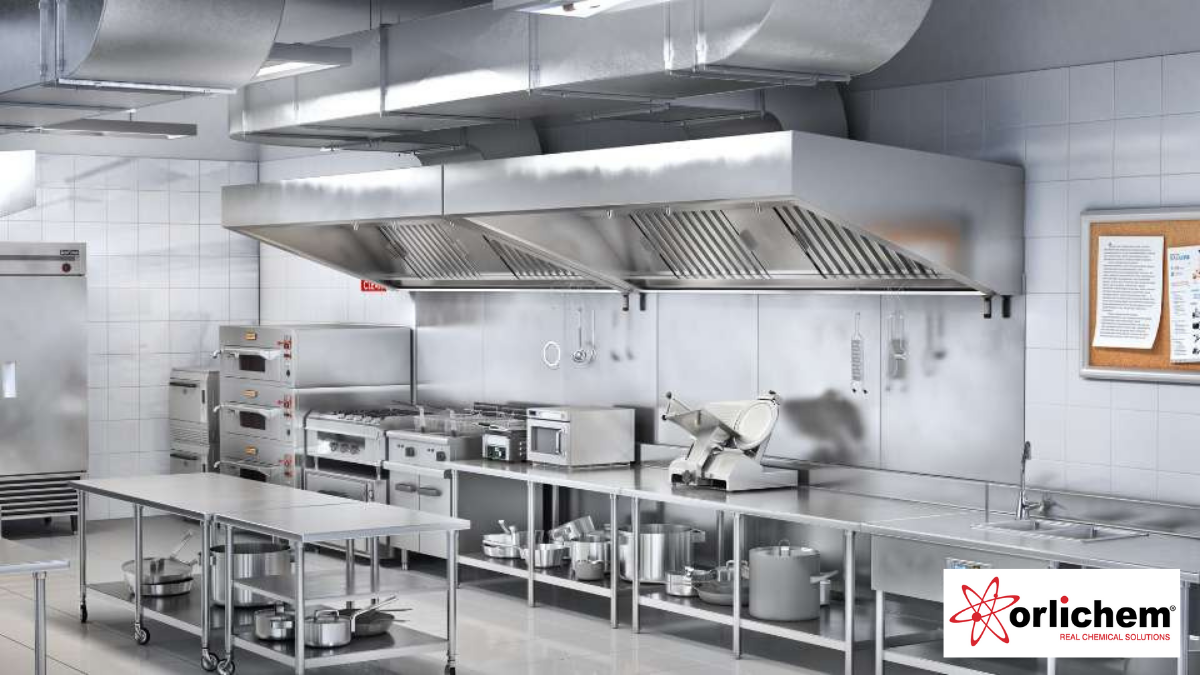
Choosing Food-Safe Degreasers in Kitchens: Food safety is non-negotiable in professional kitchens, but in practice it’s the day-to-day choices that make or break compliance: which chemicals are used on which surfaces, how they’re diluted, and whether staff can prove it. A “food-safe” claim on a bottle isn’t enough. South African kitchens are audited against national regulations and standards, and the wrong degreaser — or the right one used incorrectly — can trigger failed audits, equipment damage, or costly downtime.
In marine and port environments, authorities such as SAMSA and TNPA set the tone. In kitchens, however, your yardstick is different: South Africa’s R638 General Hygiene Regulations, SANS 10049 prerequisite programmes for food-hygiene management, SANS 1828 for cleaning chemicals used in the food industry, SANS 1853 for disinfectants/detergent-disinfectants, and the OHS Act’s Hazardous Chemical Agents (HCA) Regulations for labelling, SDSs and training.
Most kitchens use degreasers on grills, hoods, floors, drains and prep areas where oils and protein build-up are stubborn. “Food-safe” in South Africa is not a marketing adjective — it should map back to SANS 1828 for cleaning chemicals intended for food-industry use. Products compliant with SANS 1828 are formulated and assessed for this context; that’s the benchmark auditors expect to see on your file.
Degreasing removes soils (fats, oils, proteins) so that sanitisers can contact the surface. Disinfection is a separate, microbiological step guided by SANS 1853 (disinfectants and detergent-disinfectants for use in the food industry). Some products combine actions, but your validation still needs to show that the required soil removal and microbiocidal performance are both achieved for the task and surface.
On a busy service, it’s tempting to overspray a heavy-duty solvent degreaser, give it a cursory wipe, and get back to tickets. The risks are immediate and real:
Just before breakfast, the sous checks the chemical station: wall-mounted dispensers calibrated the previous week, labelled spray bottles, laminated dilution charts near the sink, and a logbook signed at start of shift. The canopy filters come down first — the night’s build-up is addressed with a food-contact appropriate alkaline degreaser at the correct dilution. The team uses red-coded cloths for the extraction system, blue for prep counters, keeping the food-contact zone strictly separate.
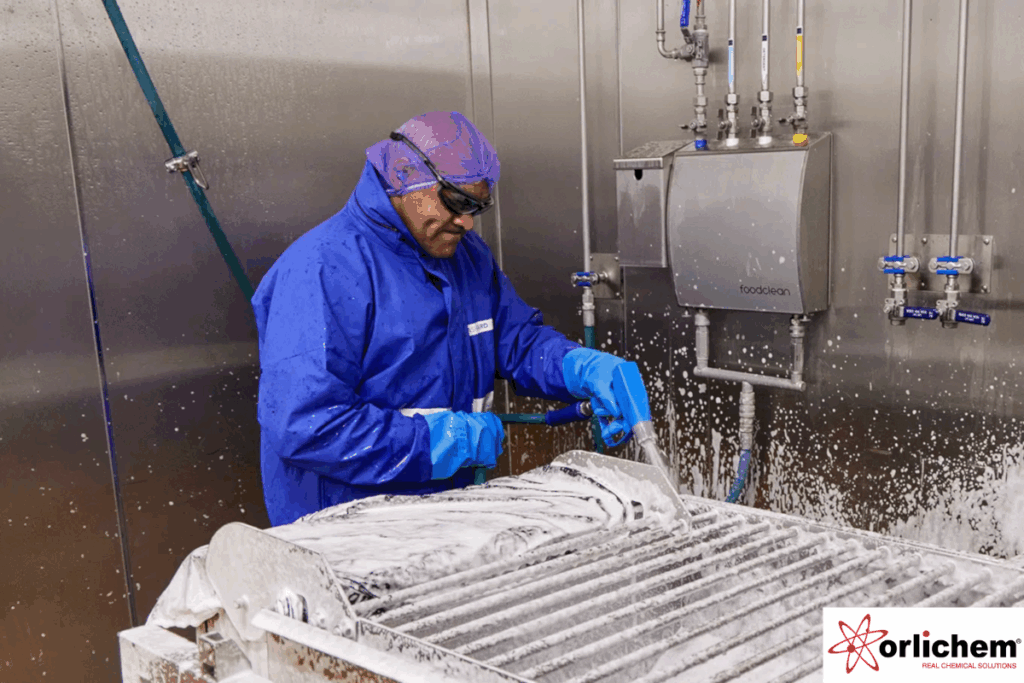
On the grill line, the chef moves from hotplate to splashback, letting the degreaser dwell long enough to break down polymerised fats before manual agitation. A potable-water rinse follows on all food-contact surfaces; the team then switches to a SANS 1853-compliant disinfectant for final sanitising. Floors and drains get a heavier-duty degreaser (non-food-contact) to reduce slip risk. The logbook captures batch numbers, dilution checks and who did what, closing the audit loop.
Selecting a compliant degreaser is less about brand and more about specification. Here’s how professionals frame the decision.
Stainless-steel prep benches and slicers need low-residue, non-tainting formulas that are explicitly suitable for food-contact surfaces and can be potable-water rinsed. Oven interiors, canopies and floors often require higher alkalinity and builders to crack tenacious carbonised soils — typically non-food-contact applications. Your spec should differentiate these use-cases in writing and in staff training.
Request written confirmation of SANS 1828 applicability for the degreaser you’ll use on food-contact surfaces (look for SABS/SANS certification or a current permit identifying the product/brand). For sanitisers in the same programme, ask for SANS 1853 compliance. File current SDSs, decanting labels and training records to meet HCA requirements.
Too strong damages surfaces; too weak fails to clean. Calibrated dispensers, colour-coded bottles and weekly checks make dilution control auditable. If you decant, label the secondary container with product name, hazards and dilution — an HCA requirement many kitchens overlook.
Most food-contact degreasers require a potable-water rinse to remove residues before sanitising. “No-rinse” claims must be assessed against intended use, local standards and label directions; when in doubt, rinse — and document that you did.
A cheaper product that needs double the application or shortens equipment life costs more overall. Factor in dispenser systems, training, packaging waste and wastewater handling. The right degreaser reduces slip incidents, improves heat-transfer efficiency on cooking surfaces, and shortens turnaround between services.
Here’s how the key South African instruments translate to your kitchen:
The foundation of food-premises hygiene: layout, equipment sanitation, pest control, water quality and record-keeping. Auditors often check for clear cleaning schedules, correct chemicals for each area, and proof of staff training — all of which your chemical programme should support.
This standard structures the hygiene system behind your HACCP plan — including cleaning and sanitation controls, segregation, and verification. Your degreasing step sits inside these PRPs; the standard expects documented procedures, responsibilities, and monitoring.
These standards speak directly to what is used and where: cleaning chemicals and disinfectants intended for the food industry, including performance and safety criteria. When a product matches the use-case and is supported by current certification, you de-risk audits and taint complaints.
Labelling, SDS availability, risk assessments, training, and air-monitoring where exposure could be significant. Decanting into unlabelled spray bottles is a common non-conformance; so is missing PPE signage near chemical stations.
A disciplined degreasing programme affects more than hygiene scores:
Write suppliers into compliance — and protect your team:
What makes a degreaser “food-safe” in South Africa?
In SA, “food-safe” should map to SANS 1828, the standard covering cleaning chemicals for use in the food industry. Look for SABS/SANS documentation that names the specific product, confirm intended use (food-contact vs non-food-contact), and follow the labelled rinse instructions. Keep the certificate and SDS on file.
Do I have to rinse after using a degreaser on prep surfaces?
Usually yes. Most food-contact degreasers require a potable-water rinse to remove residues before sanitising. Only follow “no-rinse” directions if the label explicitly allows it for that use-case and you’ve verified the standard behind the claim. When in doubt, rinse — and document it in your PRP records.
Can one product degrease and disinfect in a single step?
Some detergent-disinfectants exist, but efficacy depends on soil load and dwell time. In many kitchens, a two-step (clean then disinfect) remains the most reliable path to compliance, especially where heavy grease is present. If you use a combined product, ensure it meets SANS 1853 for the target organisms and surfaces.
What paperwork do auditors typically ask for?
Expect to produce your Certificate of Acceptability, PRP cleaning schedules, chemical list matched to areas, SDSs, decanting labels, staff training records, dispenser calibration checks, and any SANS 1828/1853 certificates linked to products used on site. Keep these together at the chemical station and in a digital folder.
Are citrus or enzyme degreasers automatically safer?
Not automatically. Natural-sounding ingredients can still taint food, require rinsing, or be unsuitable for certain surfaces. Whatever the base chemistry, the key is fit-for-purpose under SANS 1828, correct dilution, proper dwell time, and compliance with HCA labelling and SDS access for staff.
Food safety is a system, not a single product. Kitchens that treat degreasing as an auditable process — grounded in SANS 1828/1853, SANS 10049 PRPs and R638 — run cleaner, safer and more profitably. The right choice on the shelf, the right label on the bottle, and the right line in the logbook turn compliance into everyday practice.
Contact Orlichem about building a compliant, fit-for-purpose kitchen hygiene programme — from product selection and dispenser calibration to staff training and audit readiness.
???? +27 21 932 6457 · ???? orders@orlichem.co.za


 Previous