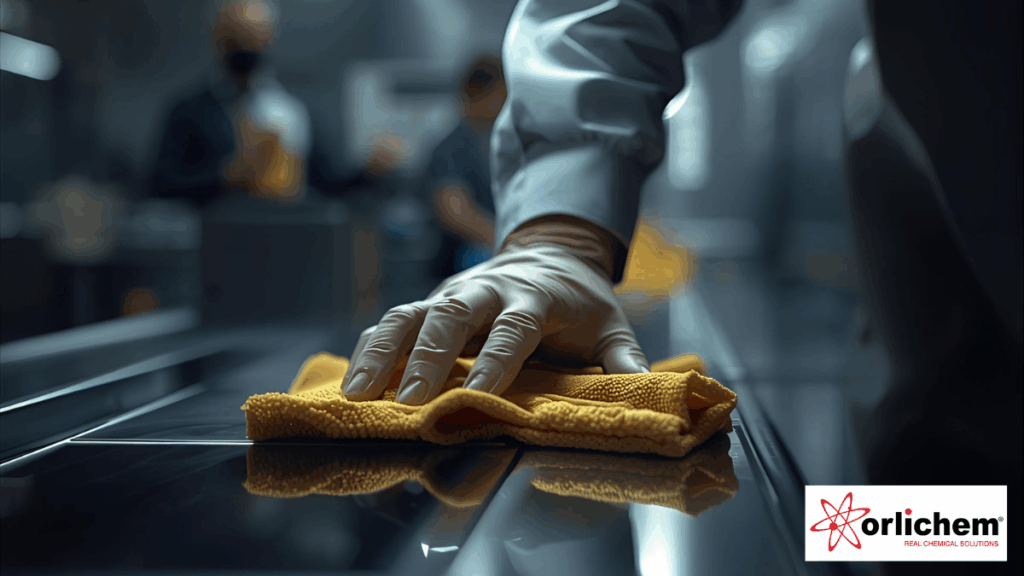
Stainless steel equipment is the backbone of many South African industries, from food processing plants to engineering workshops. Despite its “stainless” name, this versatile metal requires proper maintenance to preserve its appearance and functionality. In fact, improper cleaning and maintenance of stainless steel can lead to premature corrosion, resulting in equipment replacement costs that can exceed R100,000 for larger industrial components.
With the right maintenance approach and chemical solutions, your stainless steel assets can maintain their lustre and structural integrity for decades. This guide will walk you through the essential steps and products needed to properly care for your stainless steel equipment, helping you avoid costly replacements and downtime.
Whether you’re managing a commercial kitchen, engineering facility, or food processing plant, understanding the correct maintenance procedures for stainless steel is crucial for operational efficiency and longevity of your equipment. Continue reading to discover how to protect your valuable stainless steel investments.
Understanding Stainless Steel Properties
Stainless steel has become the material of choice across numerous South African industries due to its exceptional properties. This remarkable alloy contains a minimum of 10.5% chromium, which forms a passive chromium oxide layer on the surface. This invisible protective film is what gives stainless steel its corrosion resistance.
However, this protective layer isn’t indestructible. When exposed to certain chemicals, chlorides, or mechanical abrasion, the passive layer can break down, leaving the underlying metal vulnerable to corrosion. In South Africa’s diverse climate conditions—from the coastal humidity of Durban to the dry heat of the Northern Cape—stainless steel faces various environmental challenges.
The grade of stainless steel also matters significantly. Common grades used in South African industries include:
Understanding your specific stainless steel grade helps determine the appropriate maintenance regime. For instance, coastal businesses using grade 304 equipment may need more frequent maintenance than inland operations using the same grade due to higher salt content in the air.
Common Challenges in Stainless Steel Maintenance
Despite its durability, stainless steel presents several maintenance challenges that South African businesses frequently encounter:
Surface Contamination
In food processing facilities and commercial kitchens across Cape Town and Johannesburg, food residues, oils, and proteins can adhere to stainless steel surfaces. If not properly removed, these contaminants can harbour bacteria and eventually lead to pitting corrosion. This is particularly problematic in meat processing plants where protein-rich residues are common.
Tea Staining and Discolouration
Particularly prevalent in coastal areas like Durban and Port Elizabeth, this brownish discolouration (resembling a tea stain) affects stainless steel exposed to marine environments. The high salt content in sea air accelerates this process, affecting everything from external fixtures to processing equipment in seafood facilities.
Heat Tint and Scaling
In engineering workshops and manufacturing facilities where welding occurs, the heat-affected zones around welds often develop a blue-brown discolouration. This heat tint indicates that the protective chromium oxide layer has been compromised, making these areas more susceptible to corrosion.
Chloride Attack
Water treatment facilities and swimming pool equipment manufacturers face challenges with chloride-induced corrosion. South Africa’s municipal water often contains varying levels of chlorides, which can attack stainless steel over time, particularly at crevices and joints.
Improper Cleaning Practices
Perhaps the most common issue is the use of inappropriate cleaning chemicals and methods. Many maintenance teams unknowingly damage stainless steel by using:
A survey of South African food processing facilities found that 68% had experienced premature equipment failure due to improper cleaning methods, resulting in an average of R250,000 in replacement costs per incident.
Effective Solutions for Stainless Steel Maintenance
Implementing the right maintenance regime with appropriate chemical solutions can significantly extend the life of your stainless steel equipment. Here’s a comprehensive approach to proper stainless steel care:
Daily Cleaning and Maintenance
For routine cleaning in food processing environments, commercial kitchens, and pharmaceutical facilities, a systematic approach is essential:
For food processing equipment, Orlichem‘s Surfi-San provides excellent sanitising properties while being gentle on stainless steel surfaces. Its quaternary ammonium compound formulation effectively eliminates pathogens without compromising the metal’s integrity.
Dealing with Stubborn Stains and Discolouration
When facing more challenging stains or discolouration:
Passivation Treatments
Periodic passivation is essential for maintaining and restoring the chromium oxide layer:
A food processing plant in Johannesburg implemented a quarterly passivation programme and reported a 40% reduction in maintenance costs and extended equipment life by an estimated 5-7 years.
Preventative Maintenance Programme
Implementing a scheduled maintenance programme is more cost-effective than reactive repairs:
Expert Insights: Best Practices from Industry Professionals
South African industrial maintenance experts emphasize several key practices for optimal stainless steel care:
“The biggest mistake we see is using the wrong chemicals on stainless steel,” says a Technical Director at a leading Johannesburg food processing facility. “Many maintenance teams use whatever general cleaner they have on hand, not realizing that chlorinated cleaners can destroy stainless steel over time. We’ve standardized on pH-neutral, non-chlorinated cleaners specifically formulated for stainless steel, and our equipment lifespan has increased dramatically.”
In marine environments, additional precautions are necessary. Quarterly treatments with a product like Passivate 316 can prevent tea staining and extend equipment life by years.
Conclusion: Protecting Your Stainless Steel Investment
Proper maintenance of stainless steel equipment is not merely about aesthetics—it’s about protecting valuable assets and ensuring operational efficiency. By implementing the right cleaning procedures, using appropriate chemical solutions, and following a consistent maintenance schedule, South African businesses can significantly extend the life of their stainless steel equipment.
The key takeaways for effective stainless steel maintenance include:
With stainless steel equipment often representing a significant capital investment—sometimes in the millions of Rand for large industrial operations—proper maintenance is not just good practice; it’s essential for your bottom line.
If you’re looking to optimize your stainless steel maintenance programme with industry-leading chemical solutions, contact Orlichem today for a comprehensive assessment of your needs. Our technical experts can develop a customized maintenance plan using our specialized stainless steel care products, helping you maximize the lifespan and performance of your valuable equipment.


 Previous