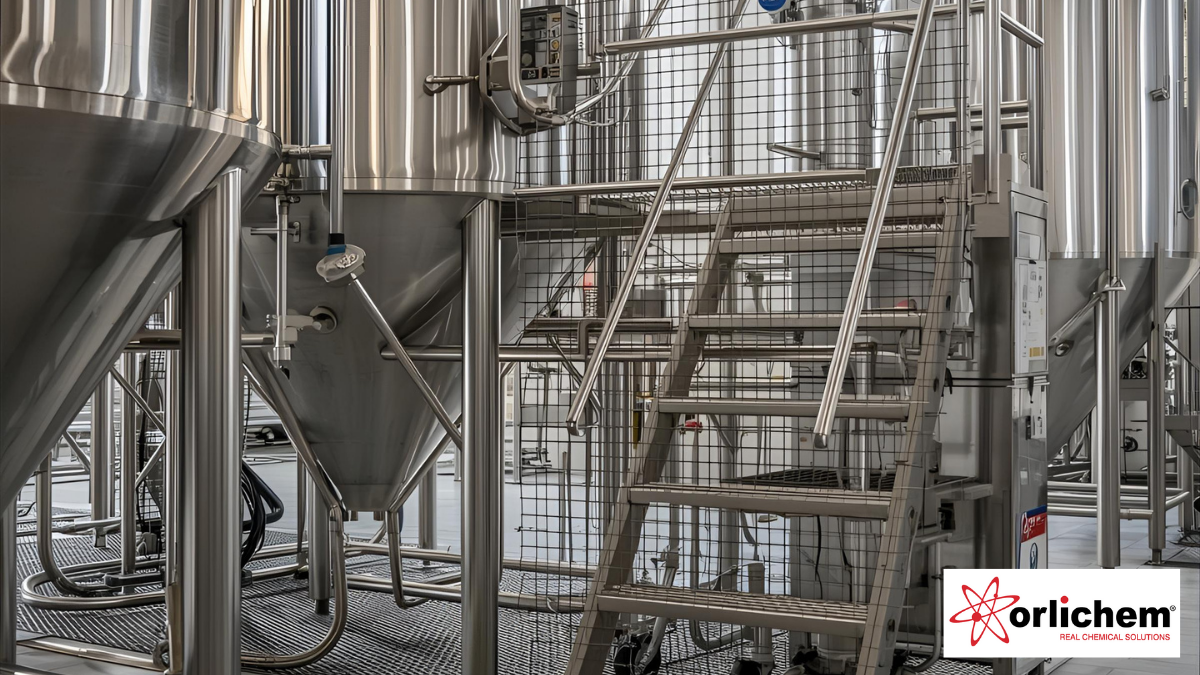
Choosing The Right Acid Cleaner. Across dairies, breweries and beverage facilities, Clean-in-Place (CIP) keeps stainless networks—from balance tanks and pasteurisers to bright beer tanks—within microbiological spec. The alkaline stage lifts proteins and fats; the acid stage does a different job: it dissolves mineral scale (milkstone, water hardness salts, beerstone) and helps maintain stainless passivity. When acid selection is wrong, plants see rising ATP counts, higher differential pressures, under-deposit corrosion and, ultimately, unplanned downtime. For South African operators working under tight utilities, R638 hygiene inspections and export audits, “which acid?” is a strategic choice tied directly to food safety and cost.
Acid cleaning targets inorganic soils: calcium/magnesium salts from hard water, heat-set milkstone in dairies and beerstone (calcium oxalate plus protein) in breweries. In most food plants, nitric acid—or a nitric/phosphoric blend—provides the backbone of the acid step because it efficiently dissolves these deposits and helps repassivate stainless steel surfaces between alkaline cleans. Frequency depends on water hardness, product mix and heat load; some lines need an acid pass every run, others daily or weekly.
Quick rule of thumb: choose the chemistry for the soil (milkstone vs beerstone vs general scale), then verify material compatibility and effluent limits with your SHEQ team before approval.
Your grade of stainless (304 vs 316L), weld quality and surface finish influence how aggressive you can be. Nitric acid is widely used for chemical passivation in food equipment (as part of a controlled procedure), but uncontrolled acidity, high chlorides or heat can undermine the passive film. Align your acid programme with your fabricator’s passivation standard and your plant’s water chemistry.
South African plants operate under three overlapping frames:
An auditor’s line of sight is simple: Is your CIP acid programme validated, repeatable and safe? That means written SOPs with setpoints, proof of chemical strength and temperature at use, corrective actions for out-of-spec cycles, and traceable training for anyone handling acids.
An under-performing acid step shows up as slower heat transfer, rising pump loads, stubborn ATP spots and recurring micro-failures—followed by longer “reclean” windows that steal production hours. The flipside—over-acidifying—can drive corrosion, increase effluent neutralisation costs and shorten asset life. In a market where water, steam and electricity tariffs keep climbing, the “right” acid and programme lower total cost by shortening cycles, reducing rework and protecting stainless integrity. Peer-reviewed work also reminds us that acid and alkaline loads carry nitrogen and phosphorous into effluent—another reason to optimise chemistry and frequency rather than “turn up the acid.”.
A Cape dairy runs UHT milk with high incoming hardness. Operators report rising pasteuriser ?P and post-CIP spots in the balance tank. The QA manager reviews cycle data: alkaline stage is on point, but acid cycles have drifted cooler with shorter contact time since a steam-saving drive.
What changes: Engineering reinstates temperature and time per SOP and switches from a commodity nitric to a blended nitric acid with a wetting/chelating package to address hard-water scale. The team also pilots a weekly acid-first “descale” on the pasteuriser after a heavy run, then returns to the standard alkali-then-acid sequence. Differential pressure stabilises, ATP passes tighten, and the plant documents the improvement for its SANS 10330 verification file.
Why it works: Milkstone is inorganic; nitric handles it efficiently, and the additive package improves wetting in complex plate heat exchangers. The validated setpoints, logged per run, satisfy both production and auditors.
A regional brewery sees scale rings in bright tanks and minor sensory drift. Standard acid cycles aren’t touching the ring.
What changes: The head brewer institutes a phosphoric-nitric blend at specified strength and temperature, extending hold time on stubborn vessels, per published brewing guidance. Post-clean, tanks pass visual and ATP checks; micro results improve; sanitiser demand drops.
Watch-outs: Never “solve” beerstone with hydrochloric acid: it may shift quickly but can pit stainless—risking expensive repairs and contamination traps.
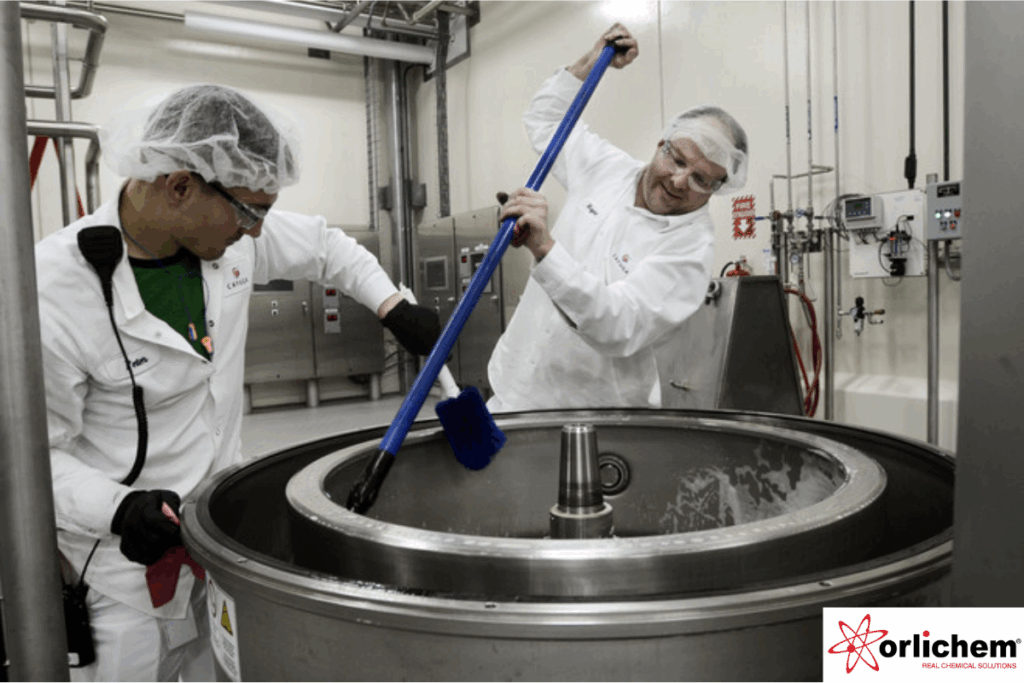
Think of acid cleaning as part of a closed-loop story that begins before the chemical meets steel:
Map the soils (milk fat/protein vs mineral load vs beerstone) and test water hardness, alkalinity and chloride content. Your water determines both the scale you get and the acid you need.
Select nitric, phosphoric or blends based on soils and material compatibility; align with your stainless grade and passivation practice. Document the rationale in your HACCP PRPs (SANS 10049/10330) and train to it.
Concentration, temperature, flow (turbulence), and time determine dissolving power. Use conductivity/pH checks or titration to verify acid strength at use, not just in the drum. Record evidence for every run—auditors will ask.
Under the HCA Regulations, acid decanting and dosing require risk assessment, correct containers, proper labelling, PPE, and emergency shower/eyewash access. Never mix acid with hypochlorite sanitisers—risk of chlorine gas—and always isolate/flush lines between different chemicals.
A right-sized acid programme helps PRPs under SANS 10049 tick more than one box: hygiene, maintenance, training and documentation. Under SANS 10330, it underpins hazard control at cleaning CCPs/CPs. Financially, you’re trading modest spend on a fit-for-purpose acid for hard savings in shorter cycles, fewer reworks and longer stainless life—plus fewer audit surprises.
What is the best acid for CIP cleaning?
There isn’t a one-size-fits-all answer. Nitric acid is the general workhorse in dairy and beverage for mineral scale and stainless passivation. Phosphoric-nitric blends are common in breweries for beerstone. Choose based on soils, stainless grade, water hardness and effluent constraints, then validate and verify.
How do you clean dairy tanks with acid cleaners?
Typical programmes run an alkaline stage first, followed by an acid step using nitric-based chemistry at validated strength, temperature and time to remove milkstone. Plants with hard water may adjust acid frequency or use blends with chelators/surfactants to improve scale removal and flow. Document and trend results for audits.
Is hydrochloric acid ever acceptable in food-plant CIP?
Generally no for stainless equipment. Chloride-bearing acids (like HCl) can pit stainless steel and undermine the passive layer, creating hygiene risks and costly repairs. Stick with nitric or nitric-phosphoric blends validated for your soils and materials.
What does South African compliance require for acid handling?
Under R638, you need clean, hygienic equipment and documented cleaning schedules. SANS 10049/10330 require PRPs and HACCP controls for cleaning, with validation and verification. The HCA Regulations (2021) under OHSA cover chemical risk assessments, PPE, labelling and training for handling acids.
How do I show an auditor my acid programme is in control?
Keep SOPs with setpoints; log concentration/temperature/time per run; trend ATP/visual/DP/micro results; conduct periodic challenge cleans; and record corrective actions. Map all of this to PRPs (SANS 10049) and HACCP verification (SANS 10330).
Acid cleaning in CIP isn’t a commodity buy—it’s a food safety control, a compliance obligation and a cost lever. The right acid, matched to soils and stainless and run at validated setpoints, protects product and plant while keeping auditors comfortable. If your trend data shows creeping ?P, rising ATP or stubborn beerstone, it’s time to revisit the chemistry, programme and training.
Speak to Orlichem’s CIP team for guidance on selecting and validating acid cleaners and supporting chemistries that fit your process, water and compliance profile:


 Previous